Surface Design
Project Goal: Explore the possibilities of fabric surface design through natural dyes, synthetic dyes, embroidery, resist dyeing, and traditional Sashiko stitching.
Natural Dyes: Himalayan Rhubarb & Cochineal
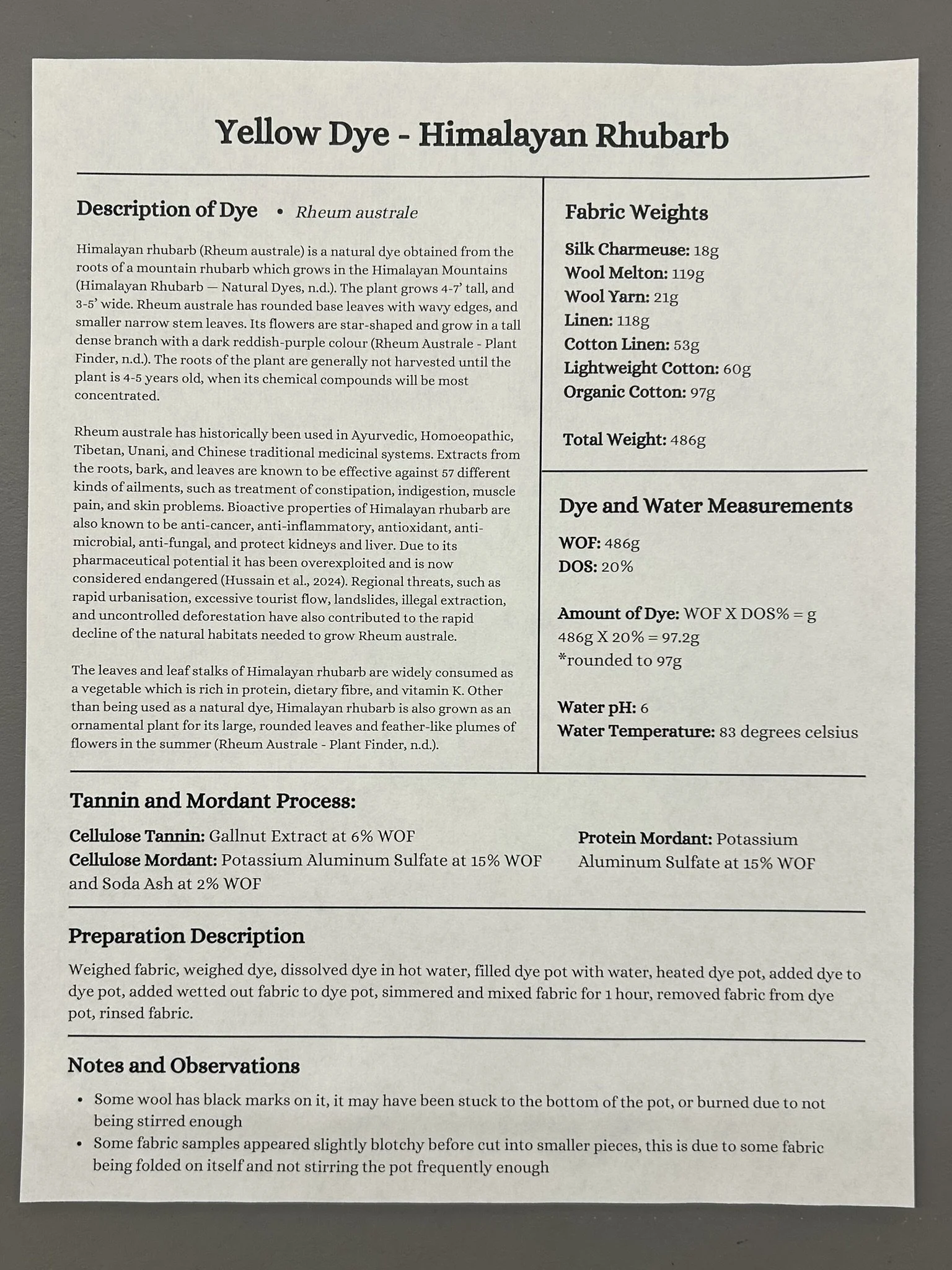
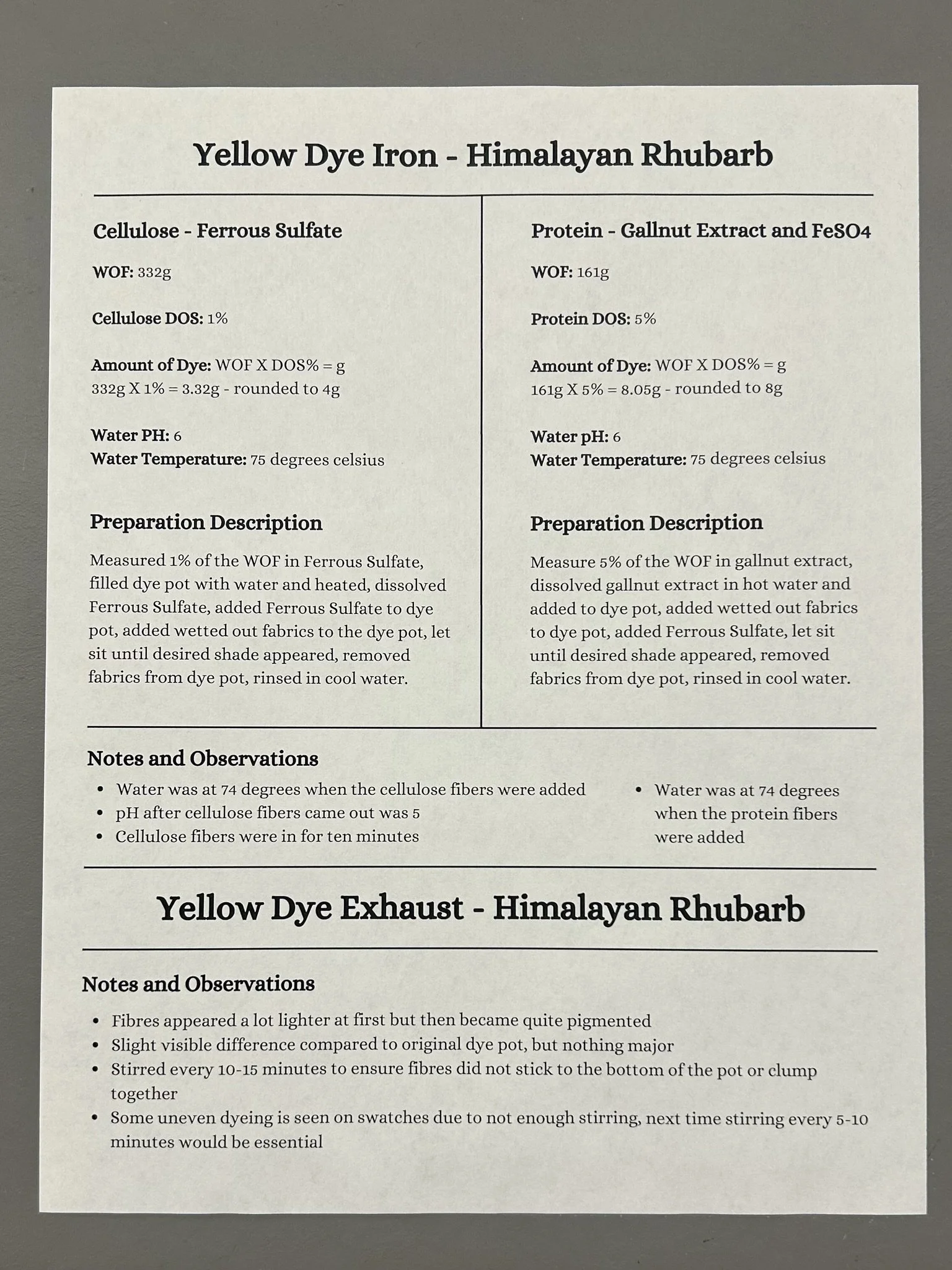
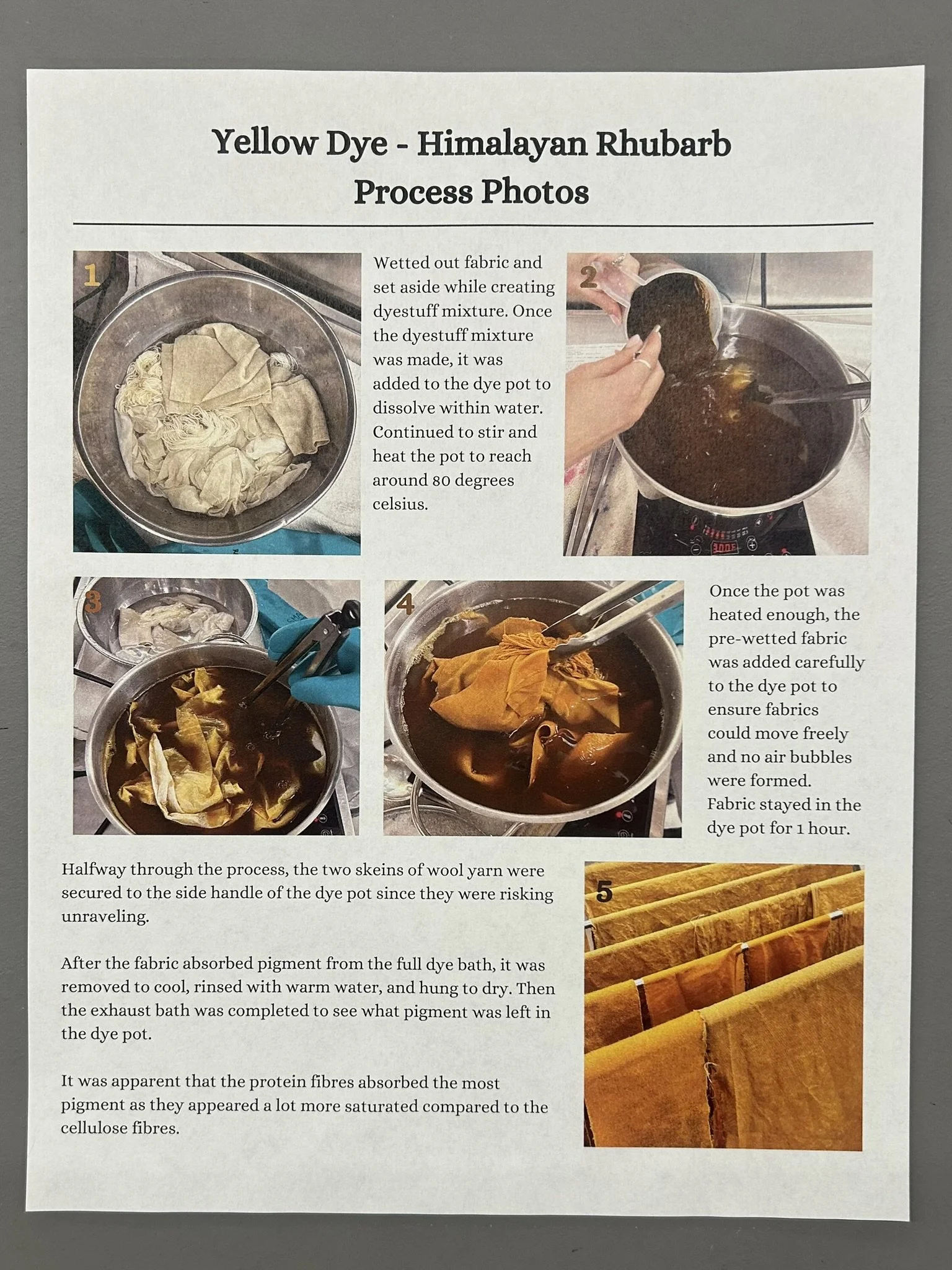
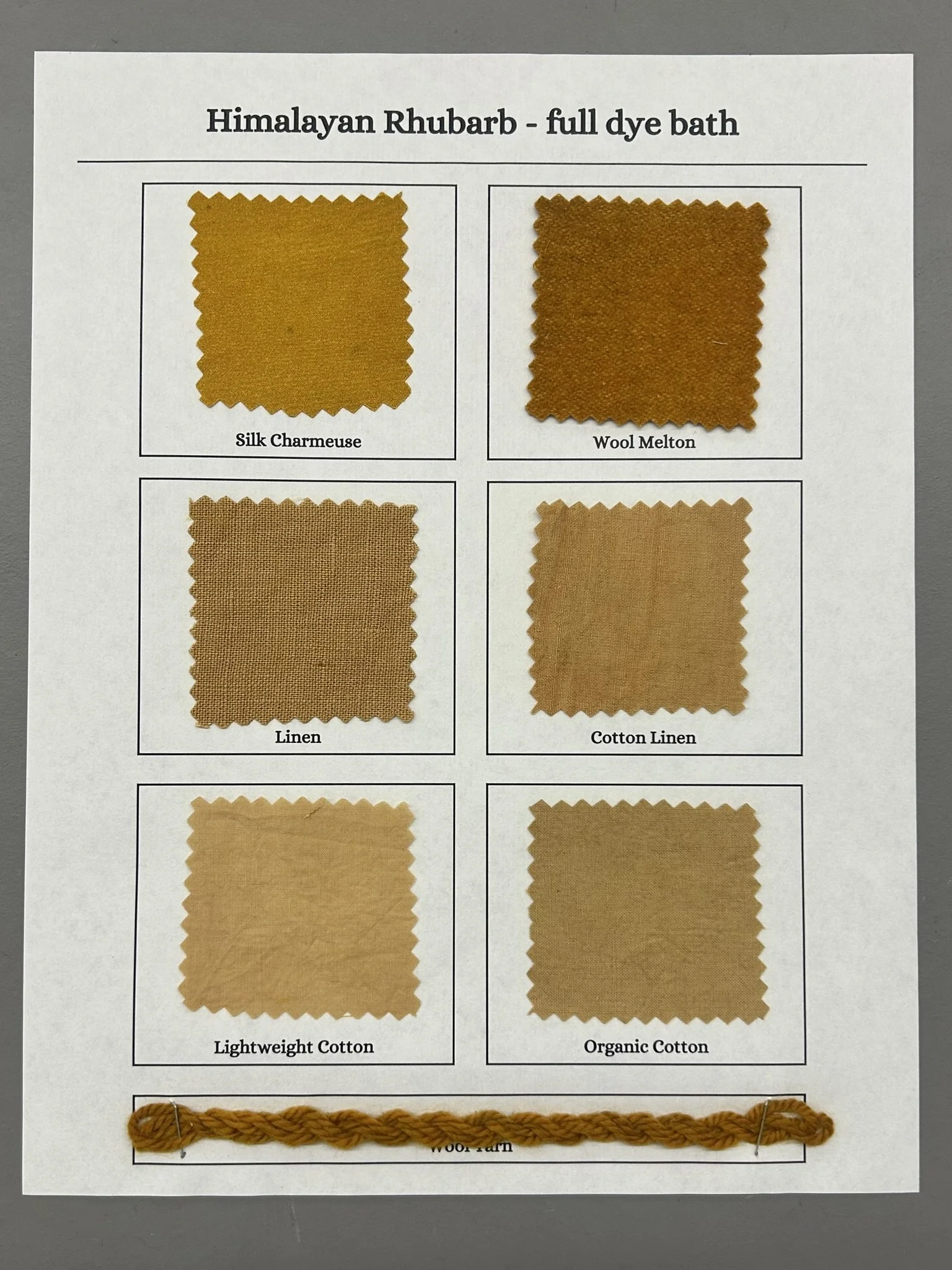
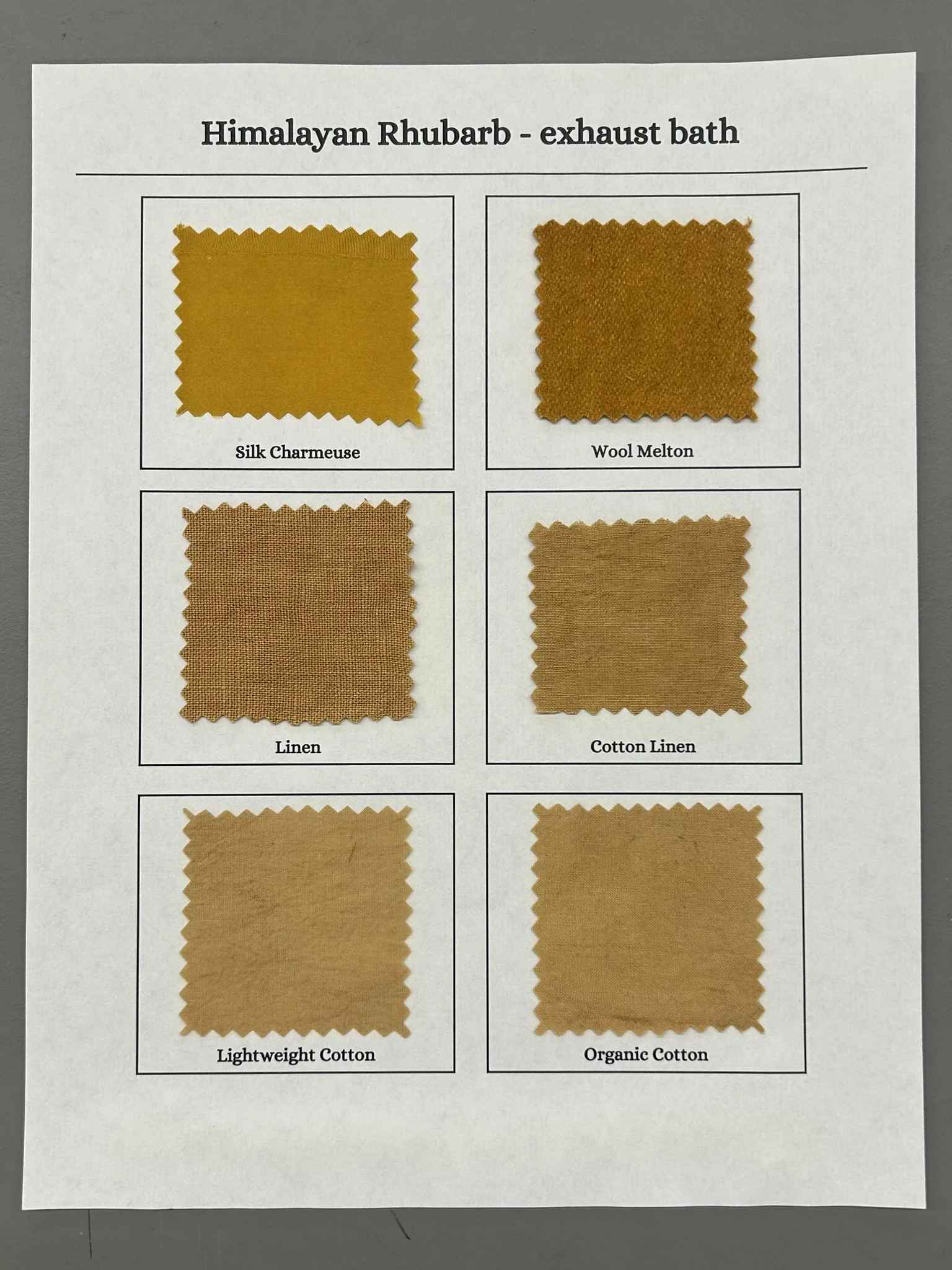
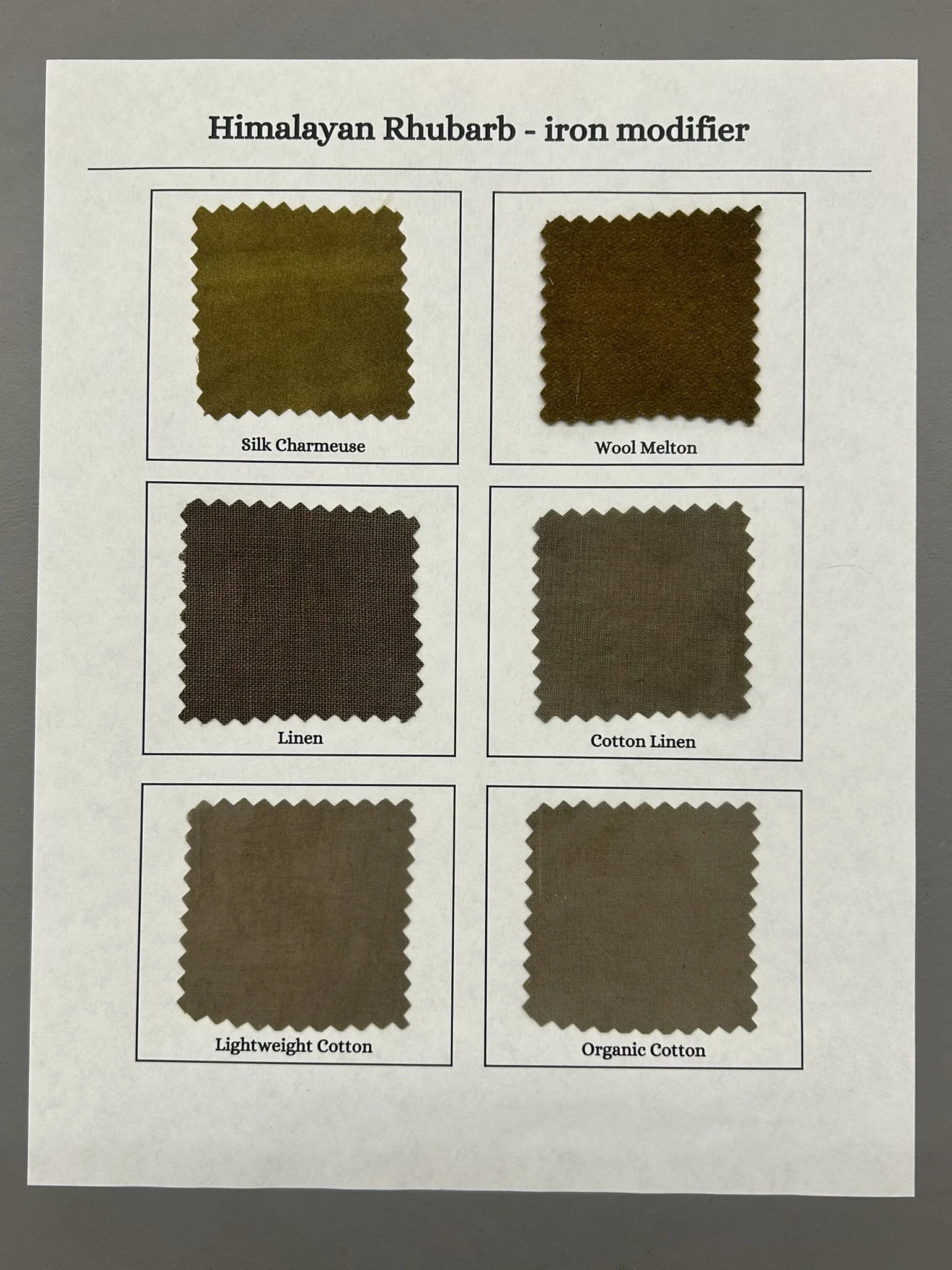
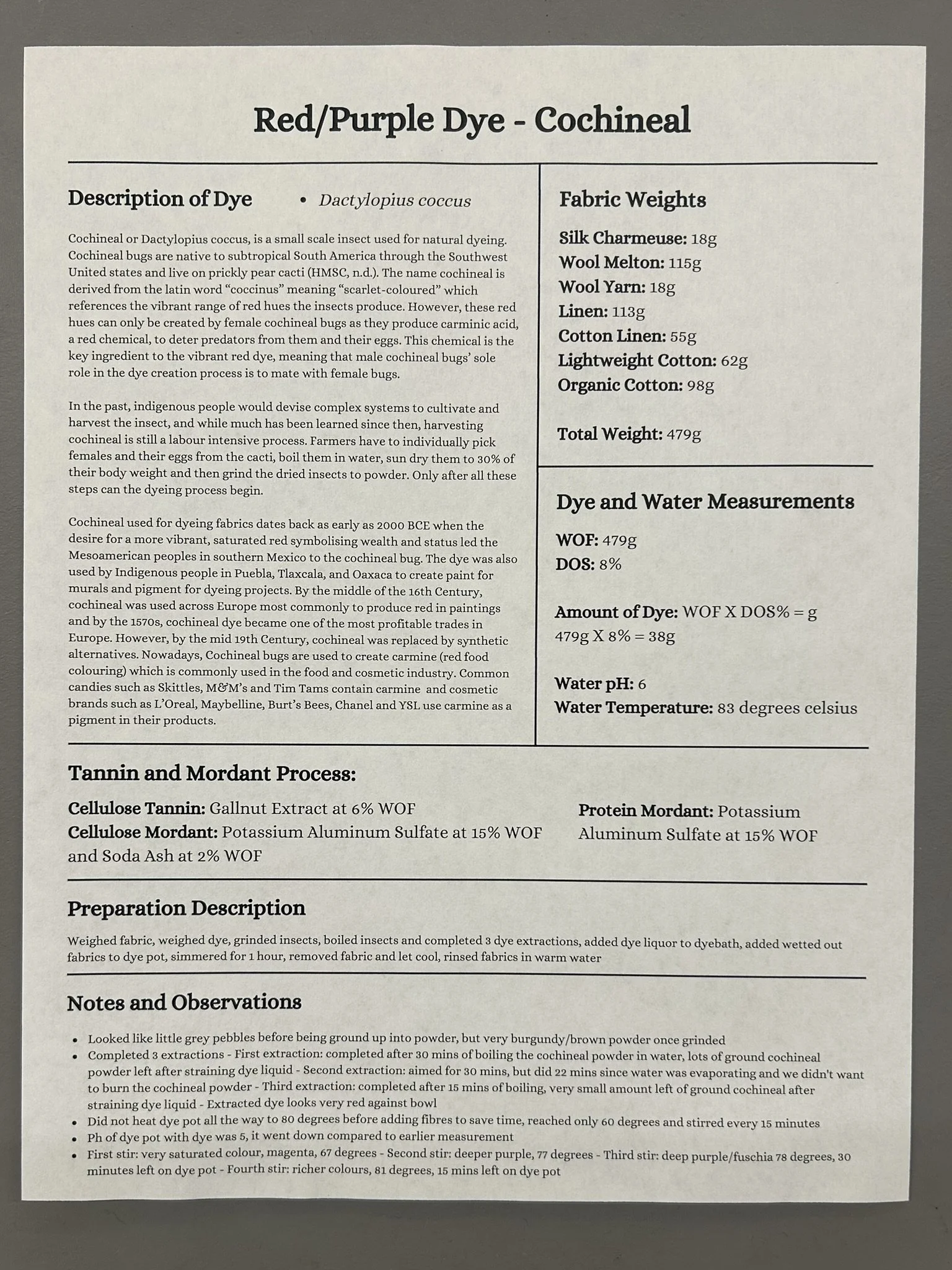
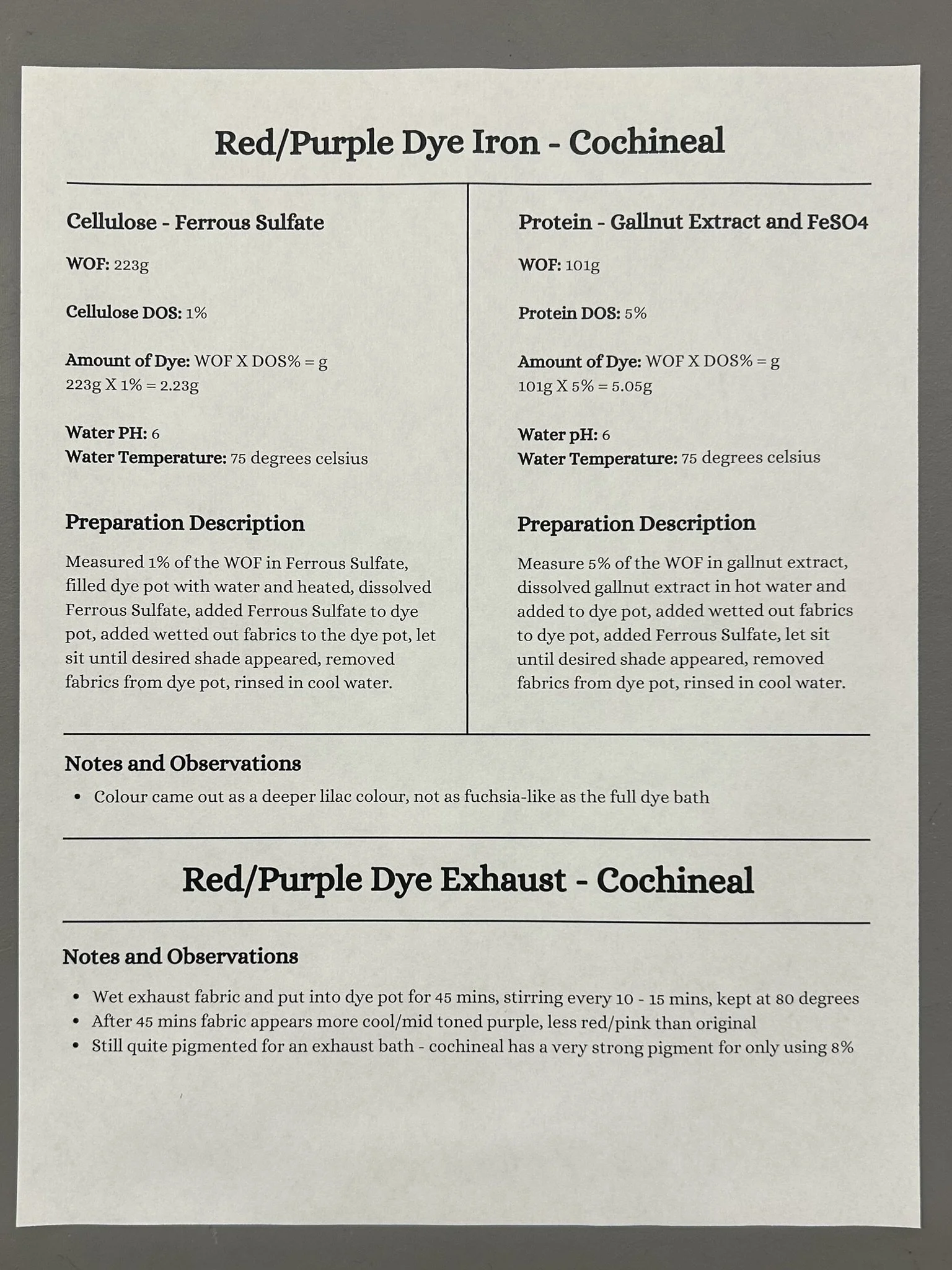
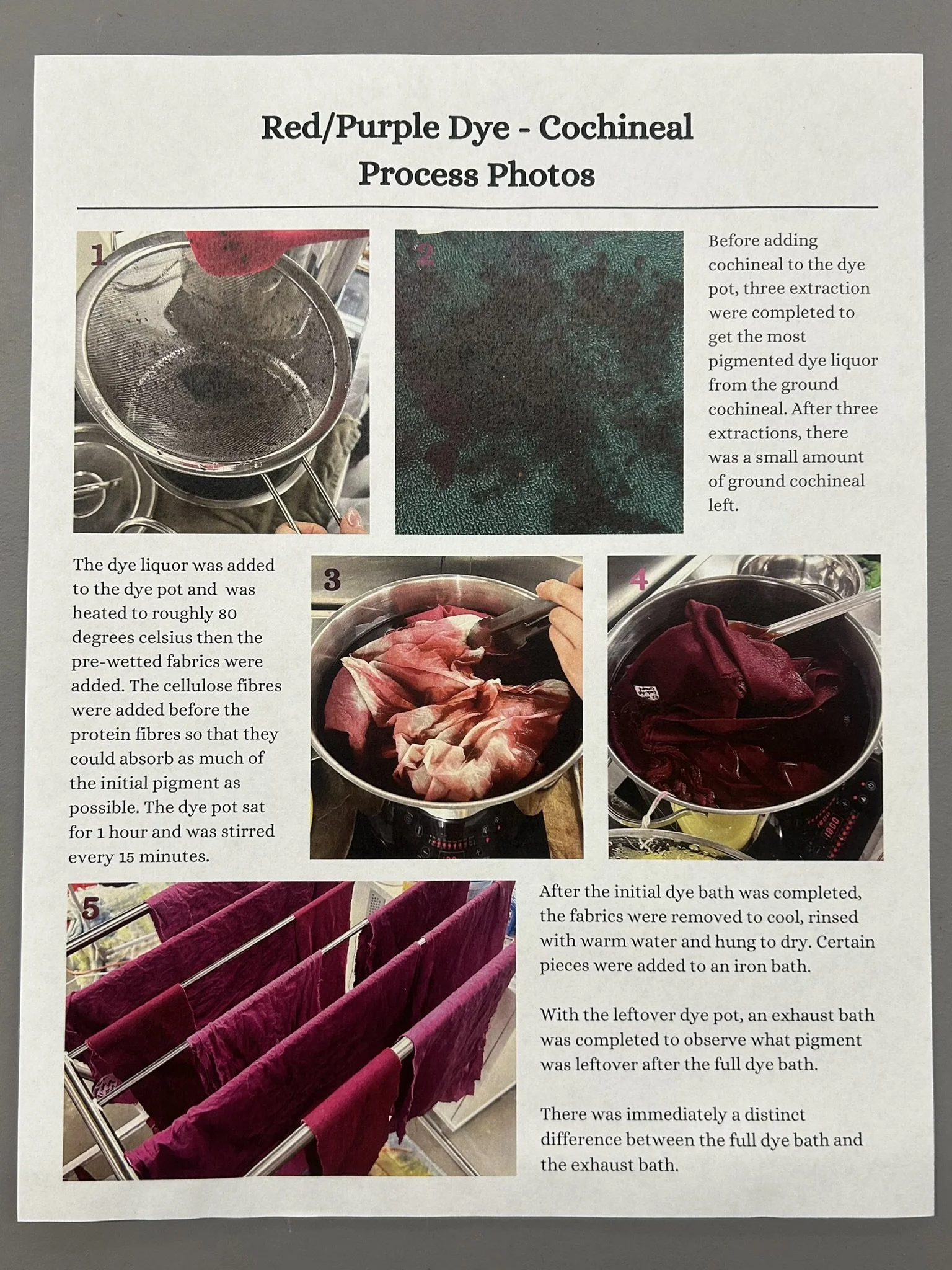
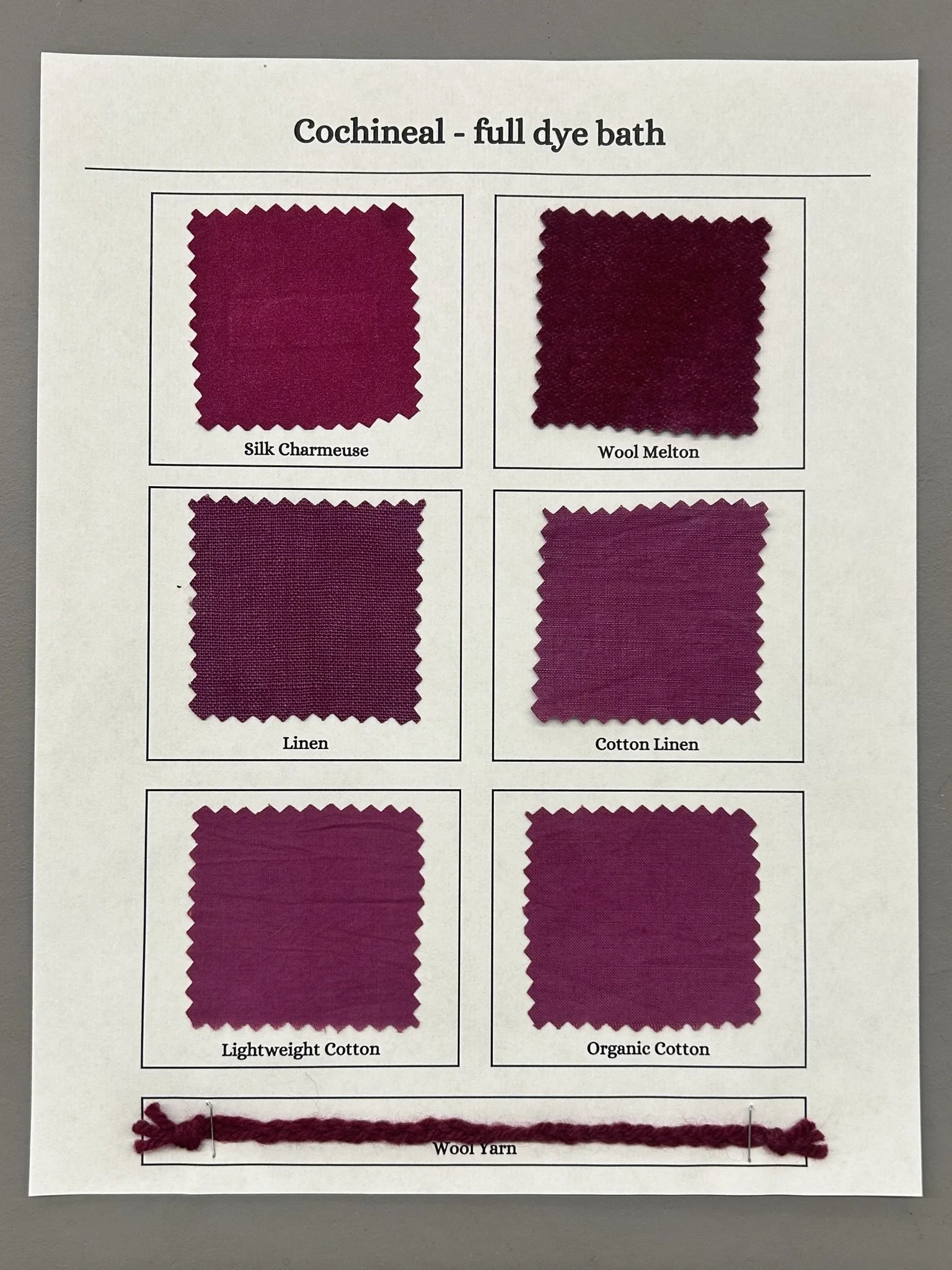
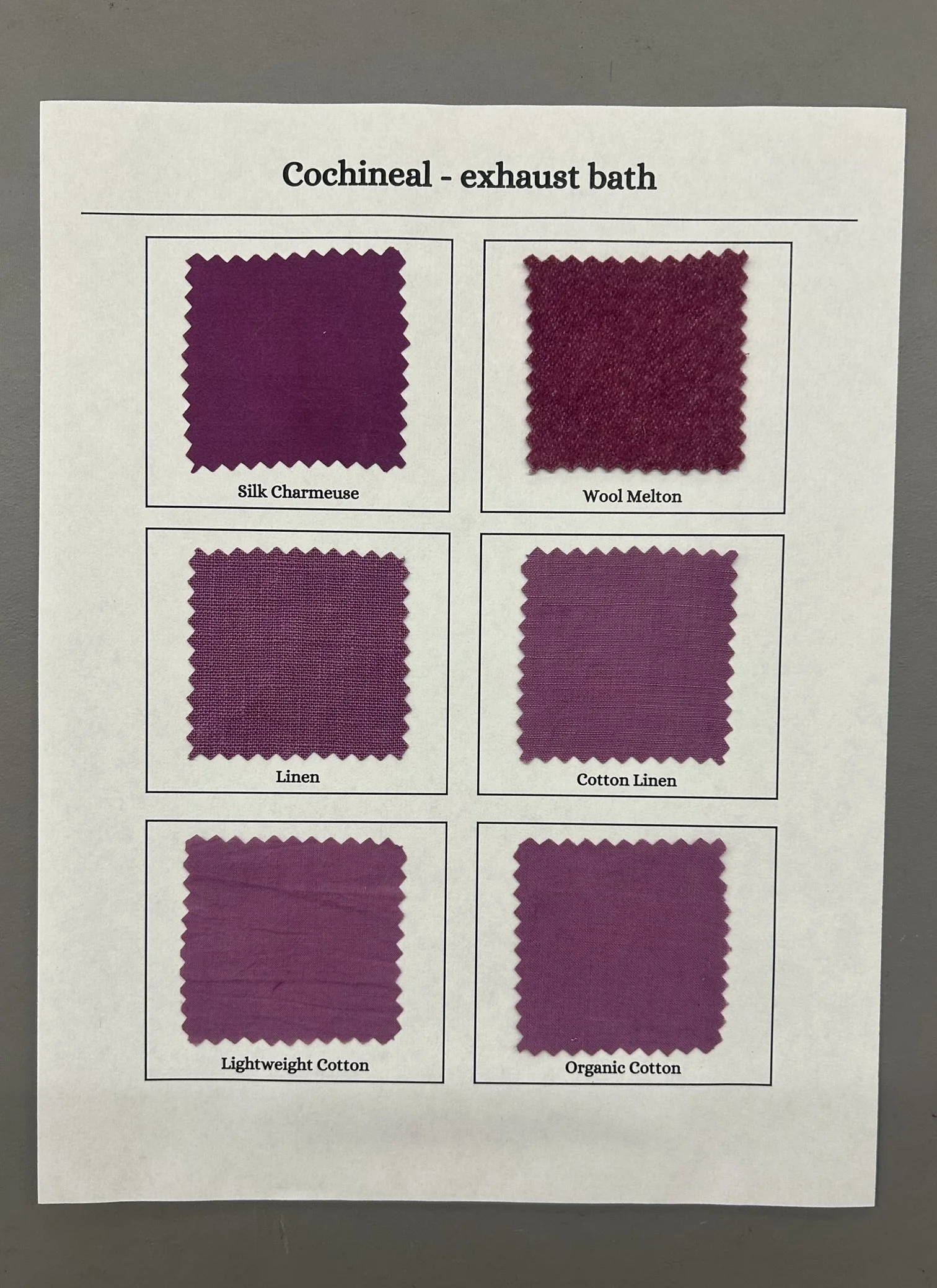
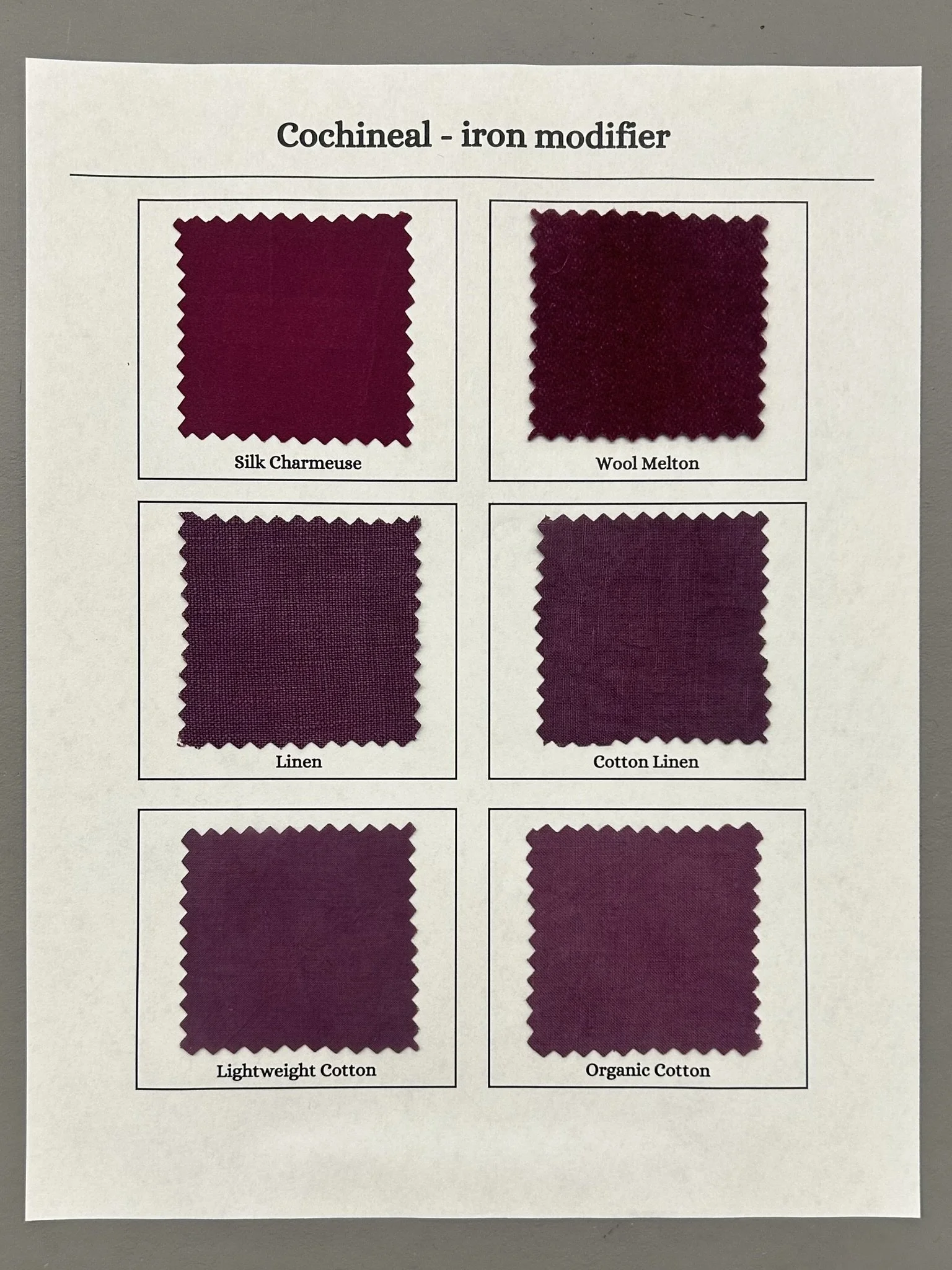
As a introduction into natural dyeing, samples of dyeing with both Himalayan rhubarb and cochineal were produced on silk charmeuse, wool melton, linen, cotton linen, lightweight cotton, organic cotton, and a piece of wool yarn. Each fabric was dyed in a full dye bath, an exhaust dye bath, and an iron modifier dye bath.
Please note that the dye samples within this section were completed in collaboration with Lucy Edwards, Rachel Denison, and Sophie MacFarlane.
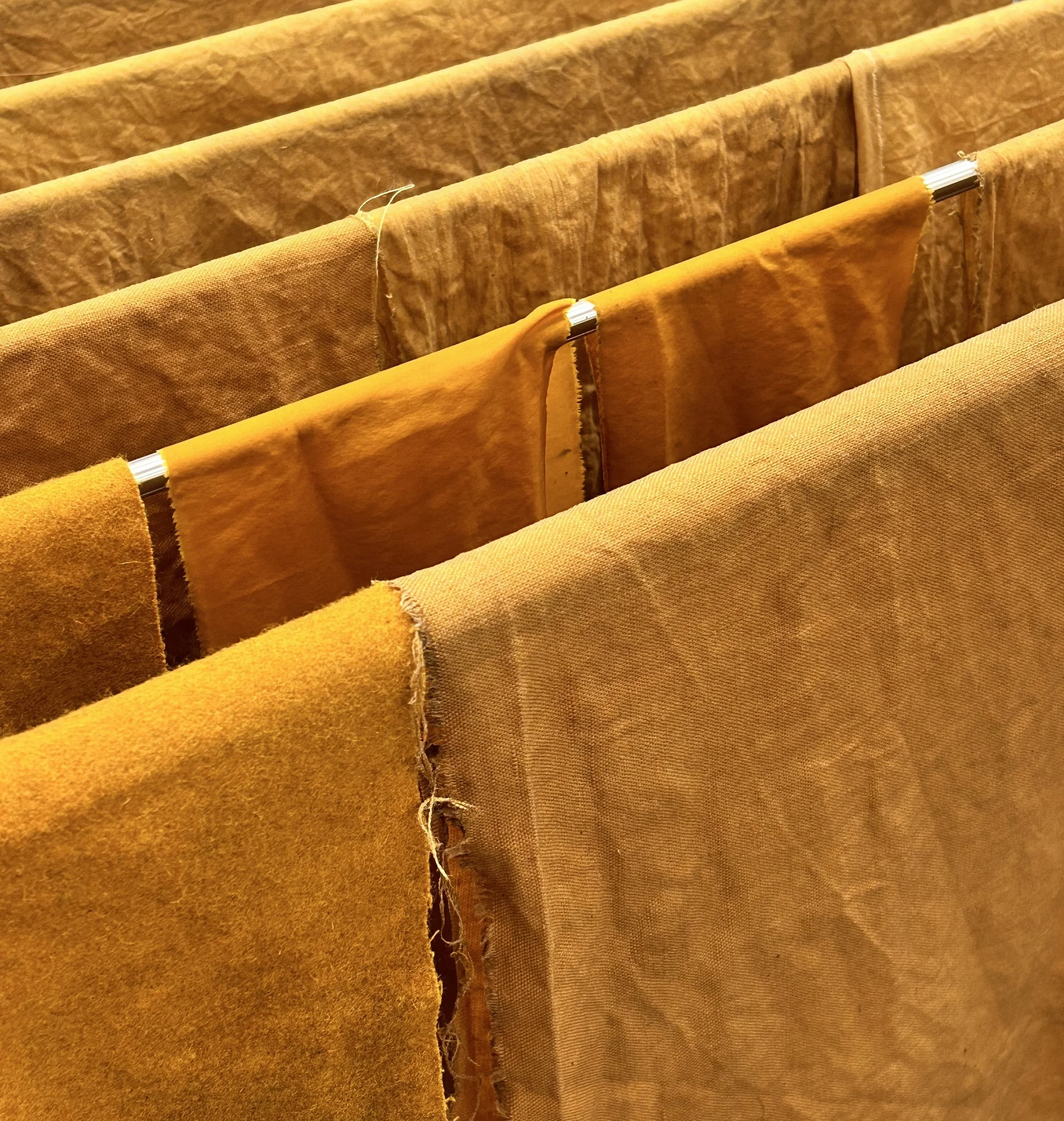
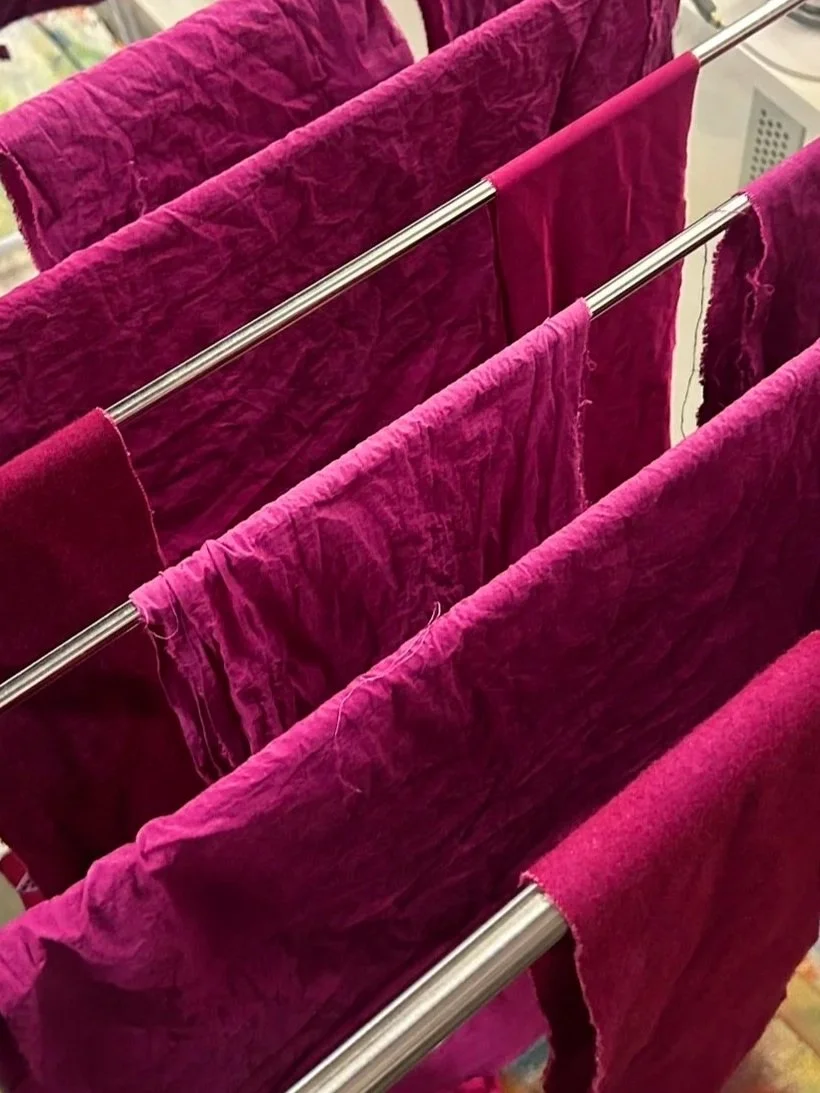
Please click on the arrows to view more.
Natural Dyes: Safflower Exploration
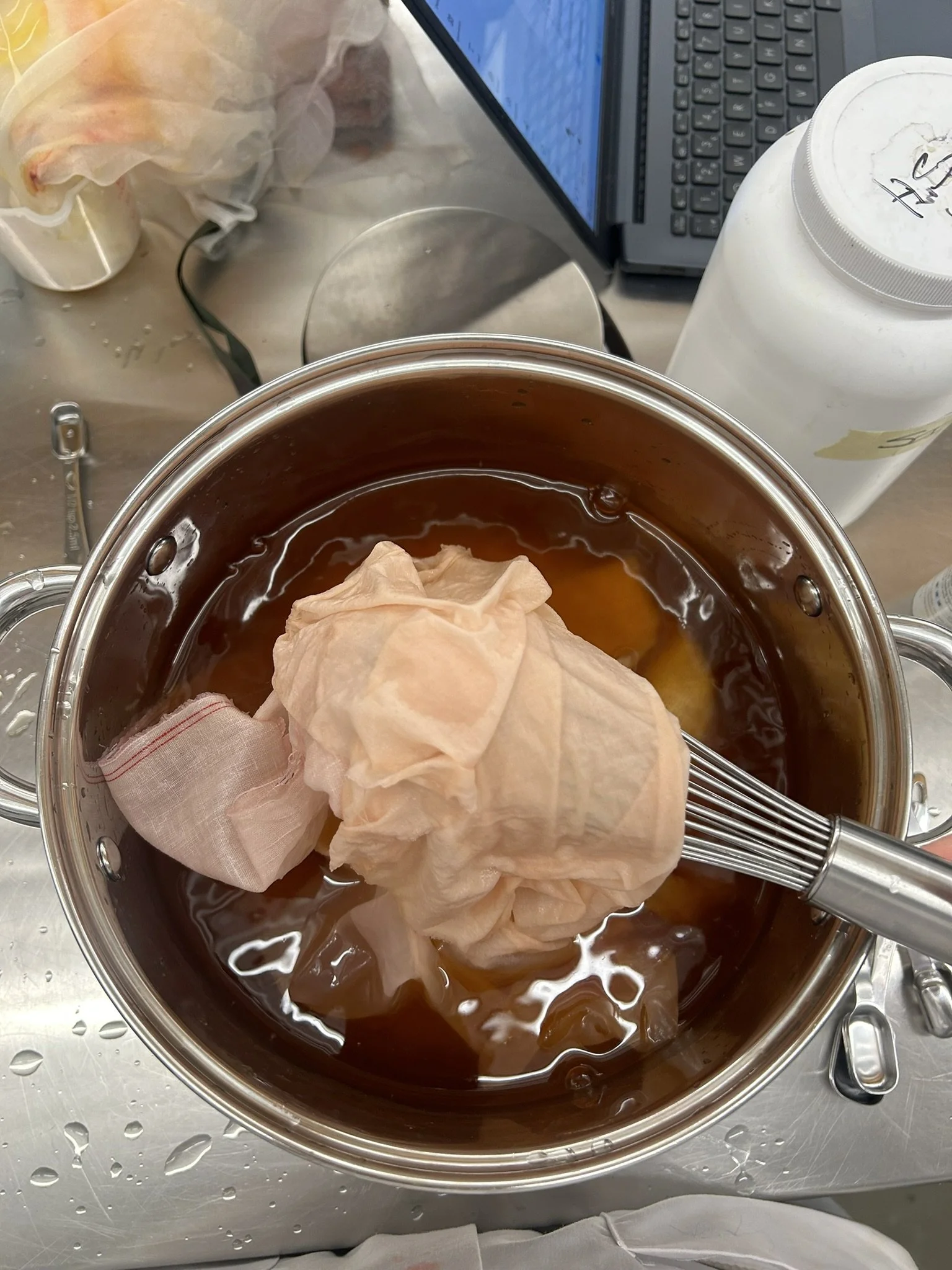
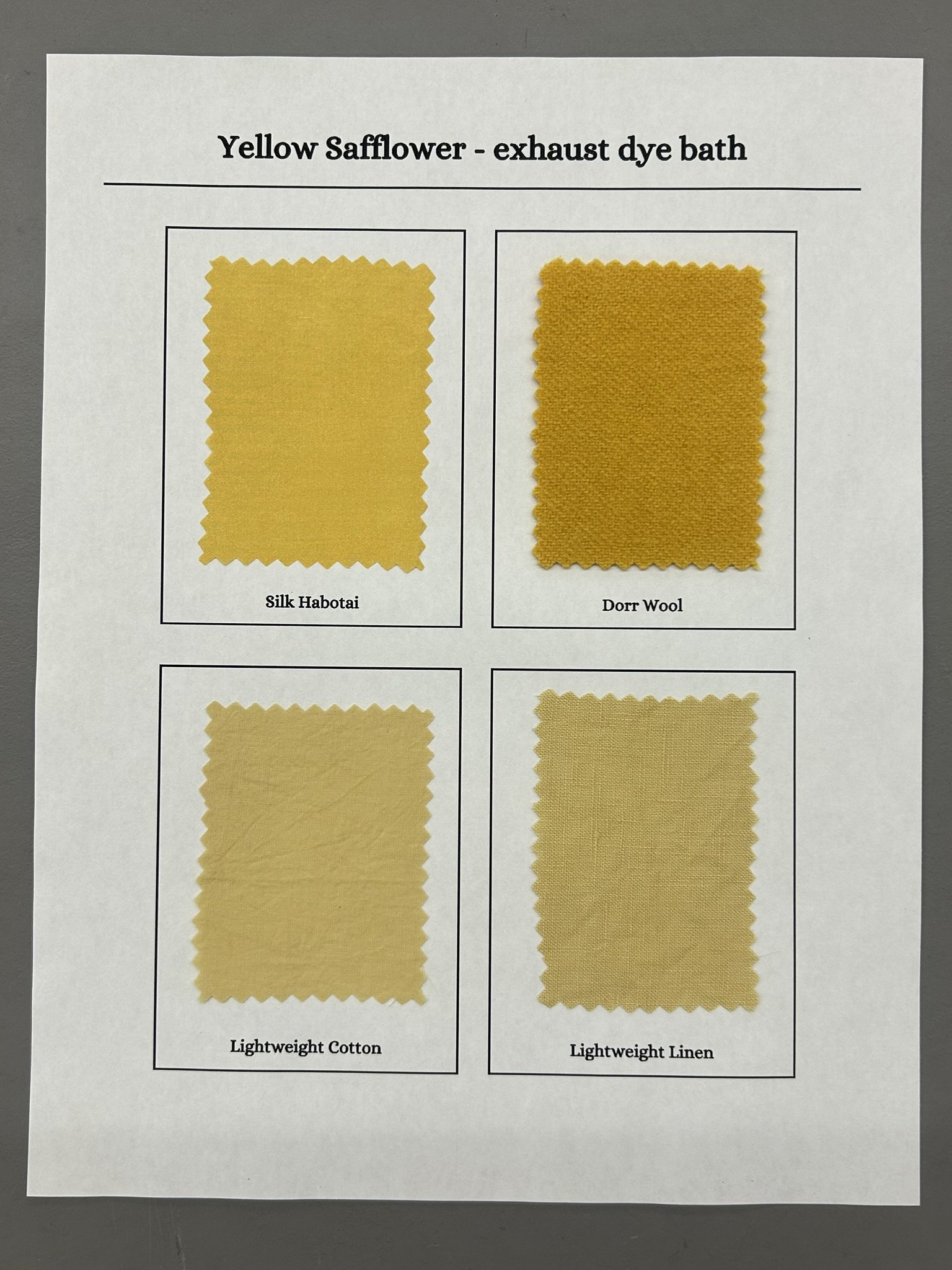
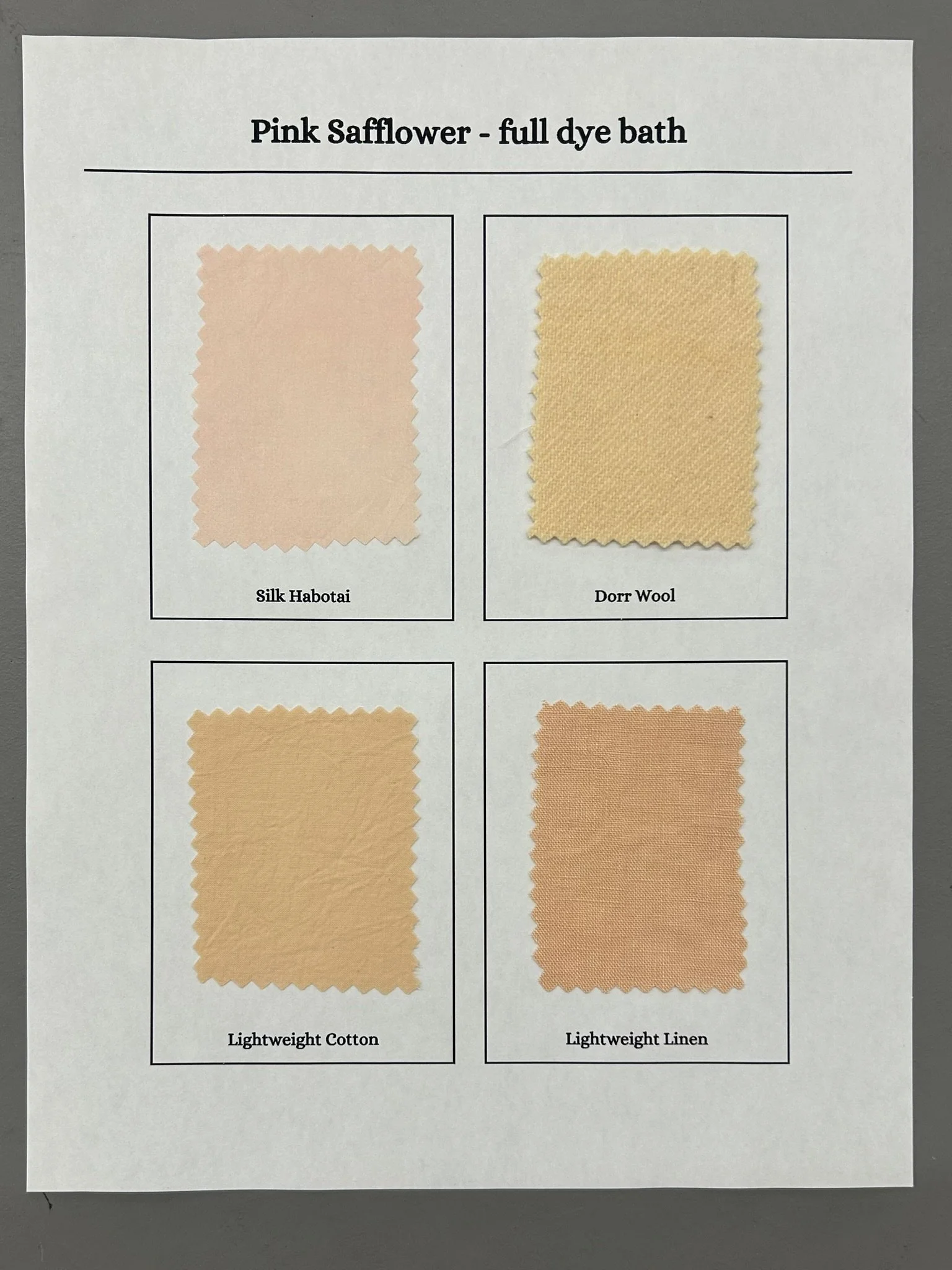
After gaining an understanding of the process and steps required for natural dyeing as well as the range of colours just one dye can produce, the idea of experimenting with safflower dye came about.
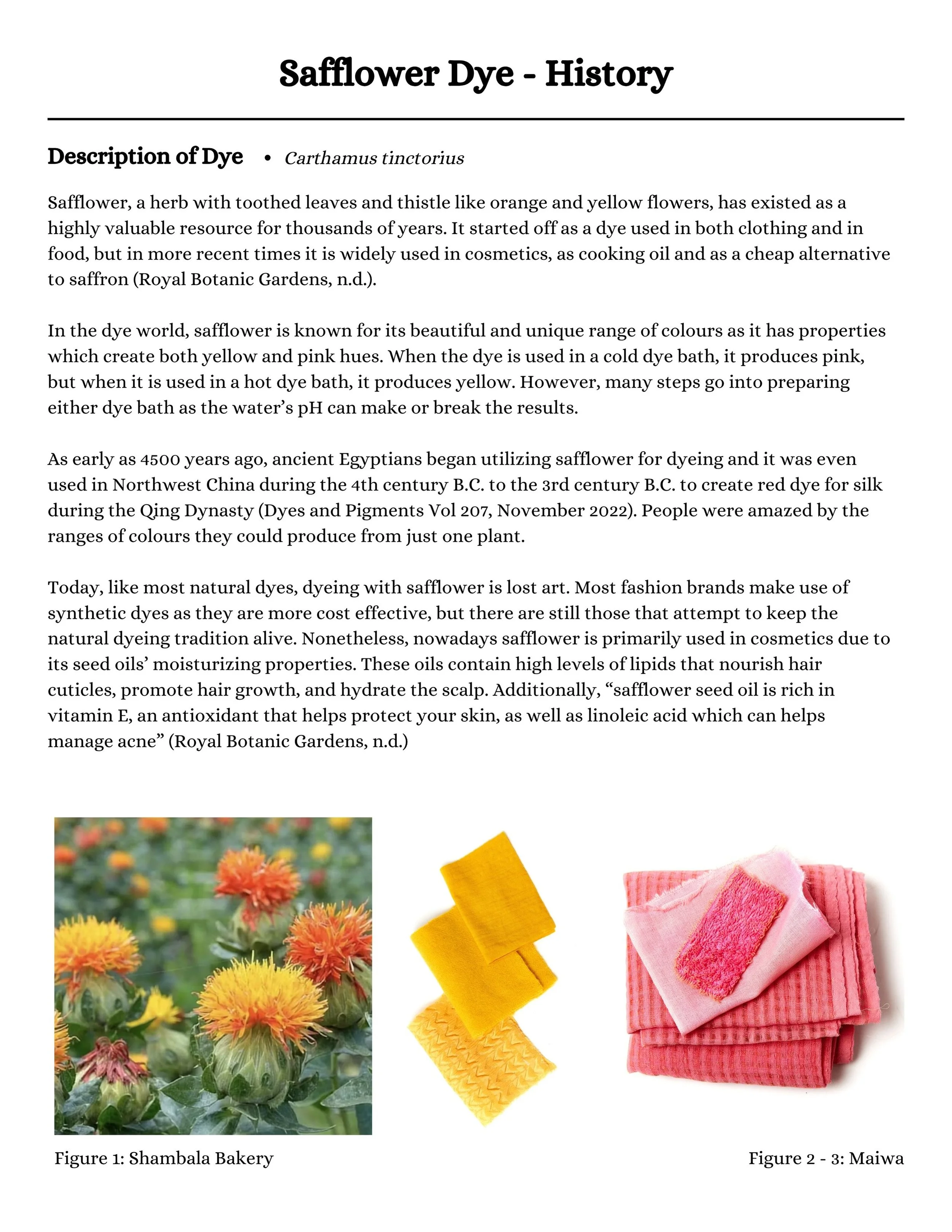
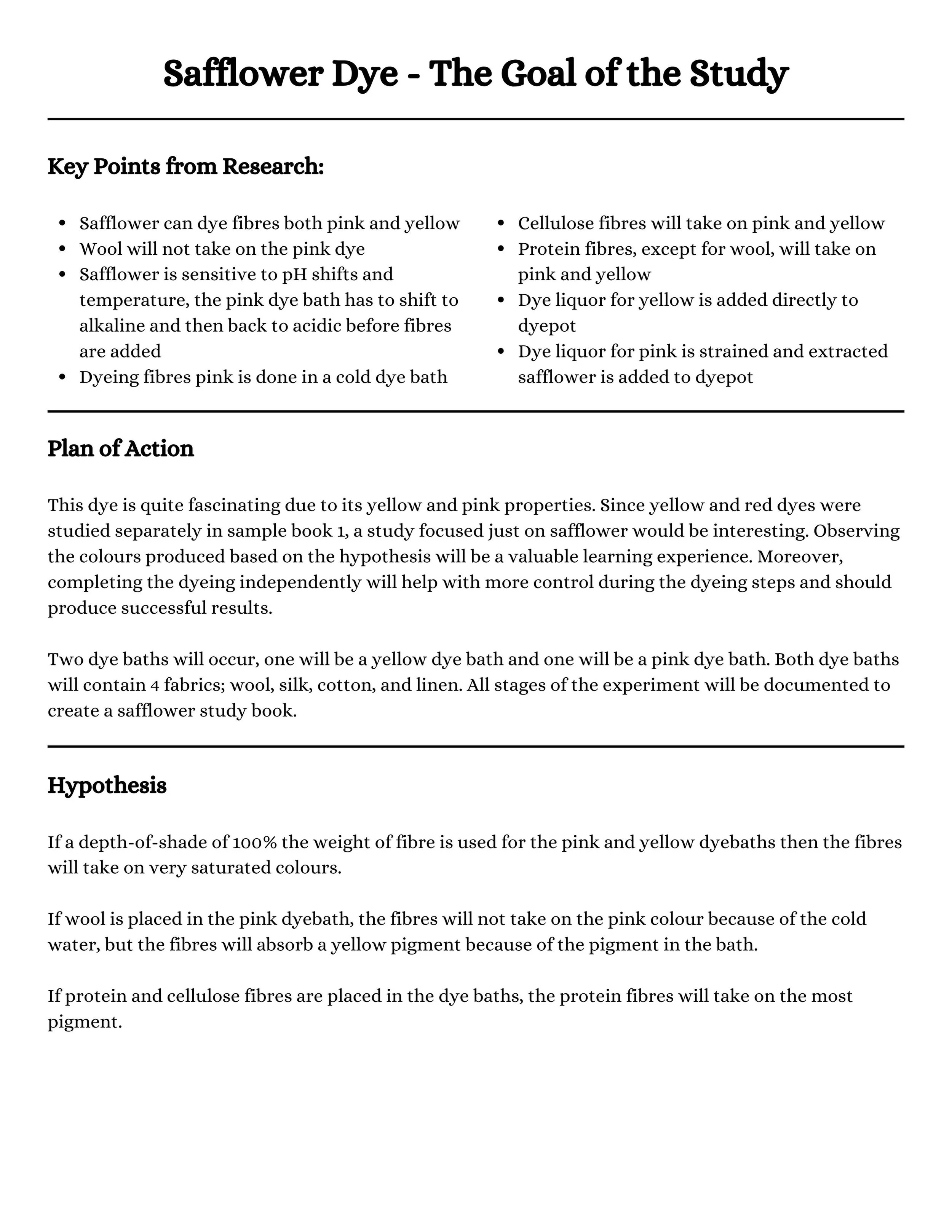
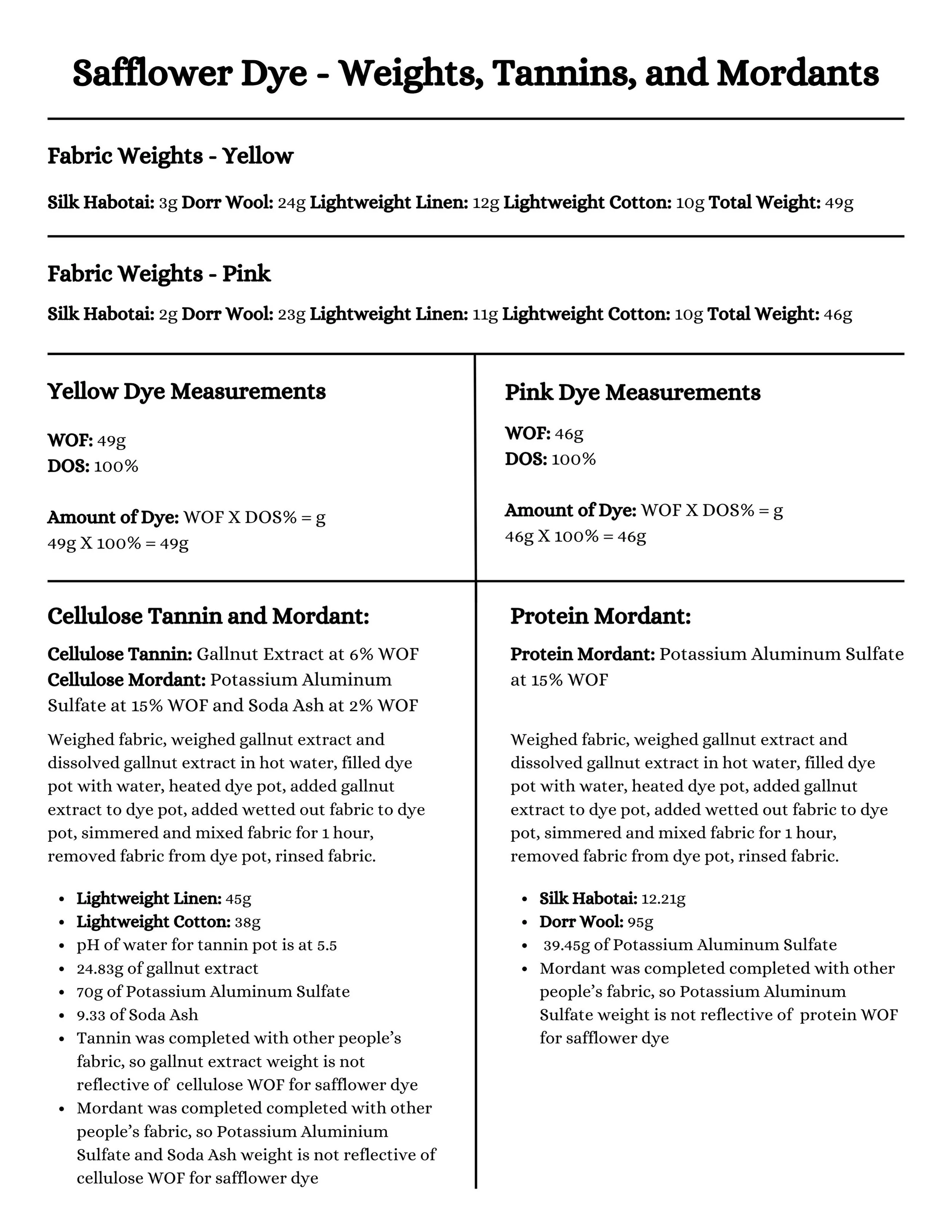
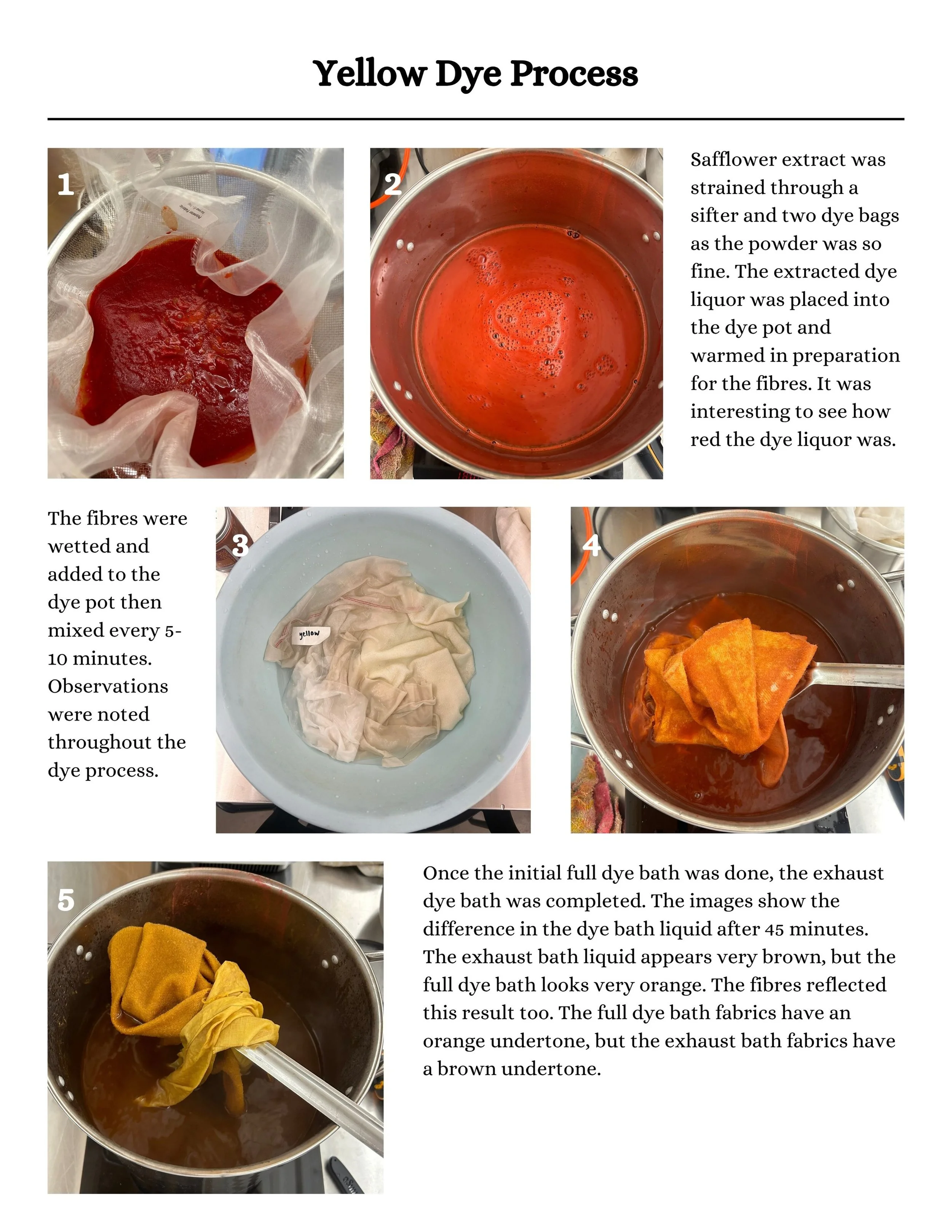
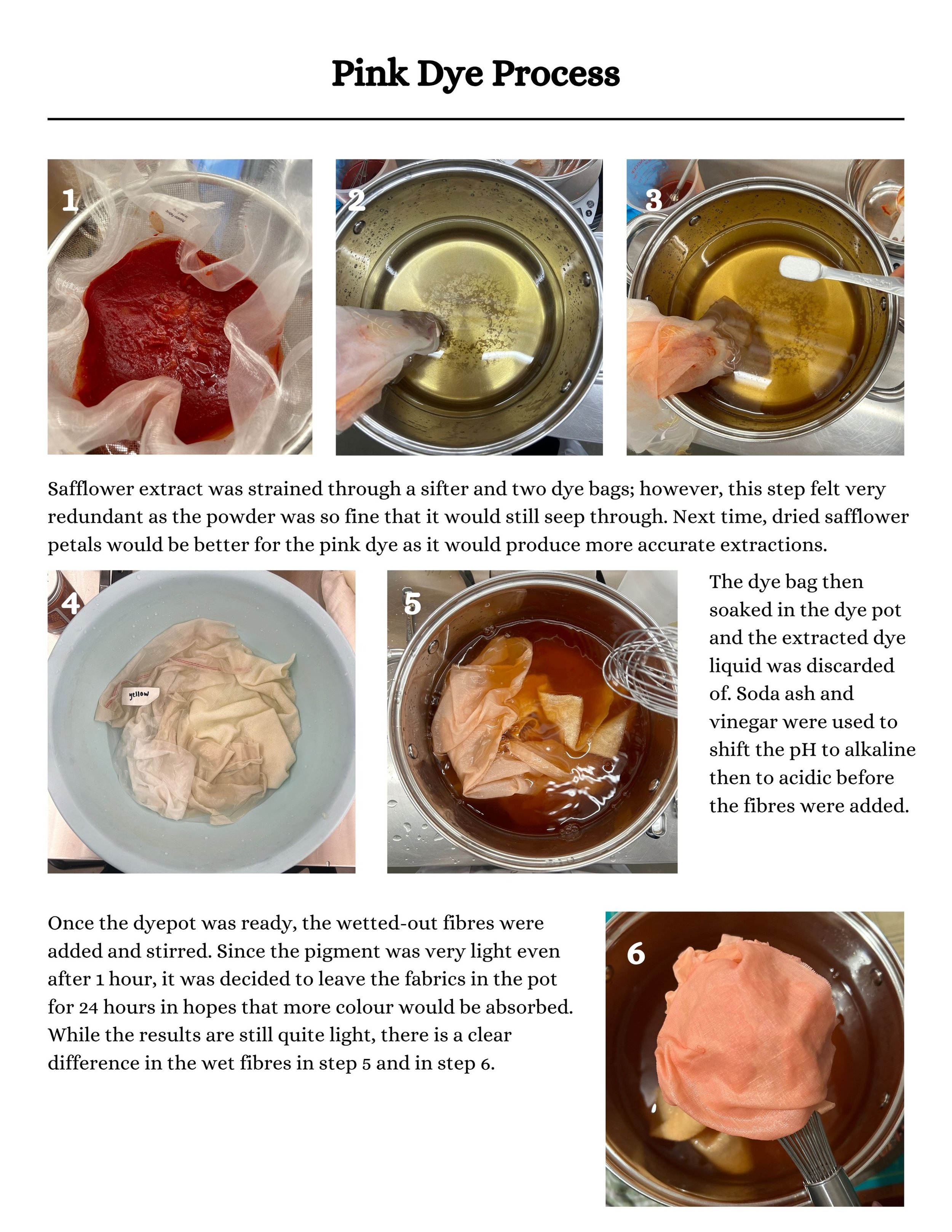
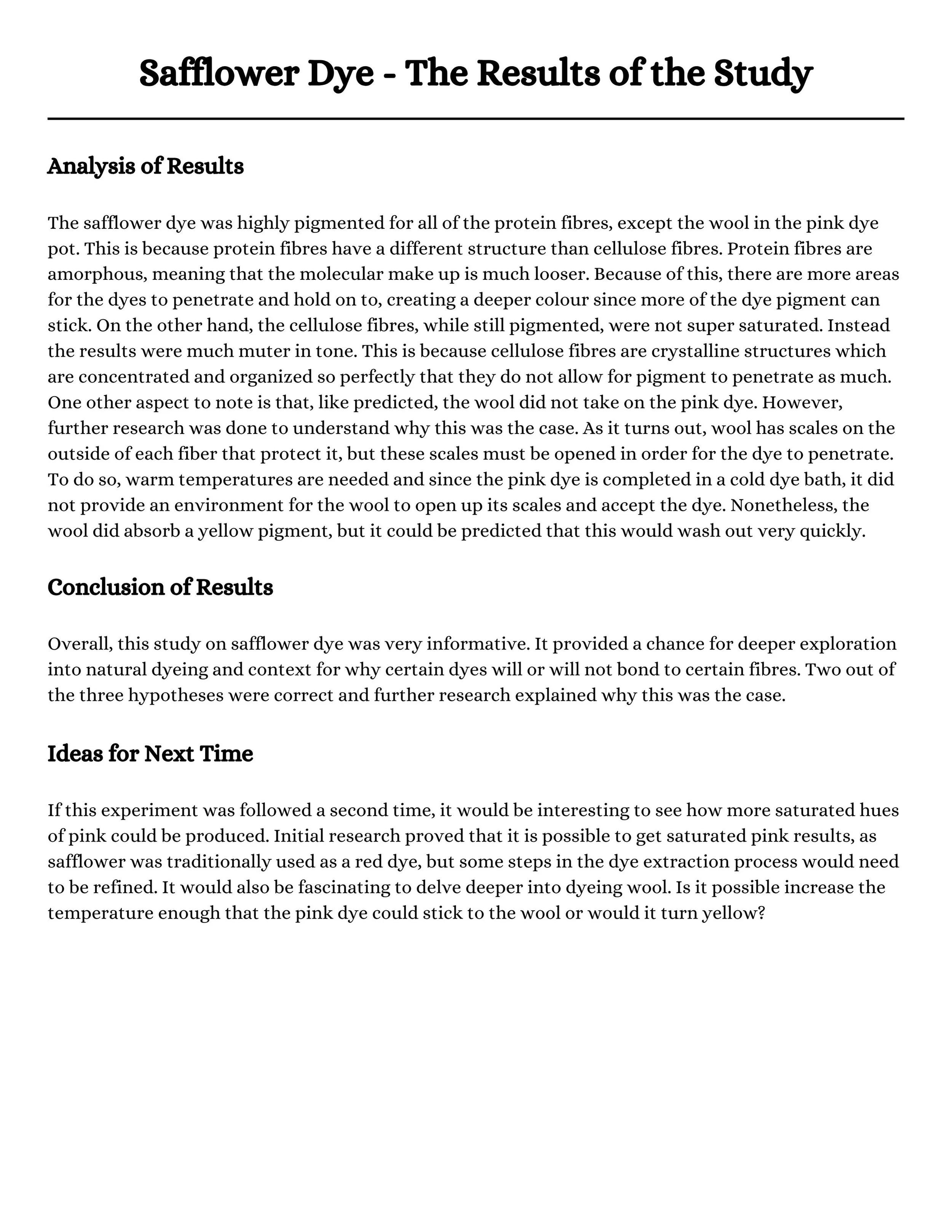
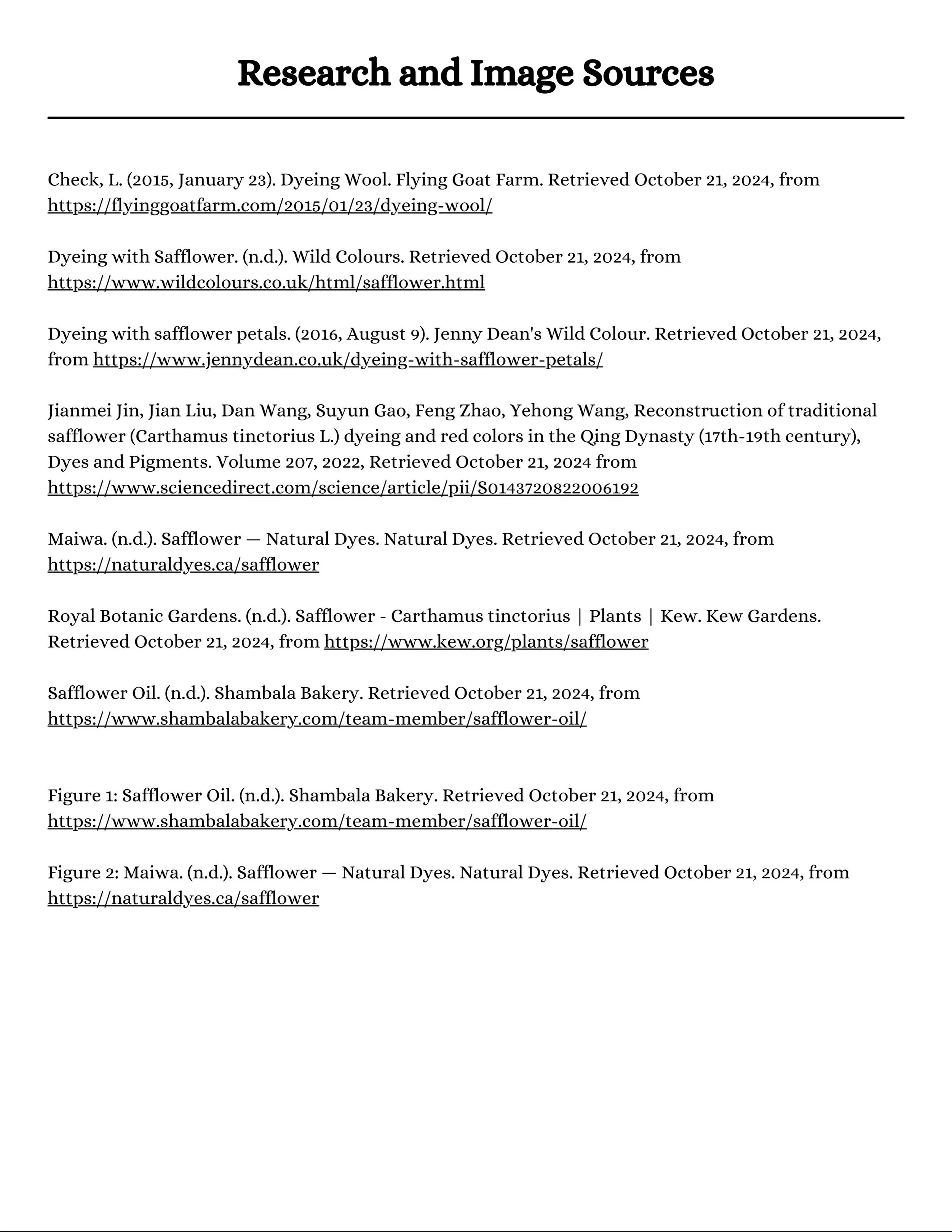
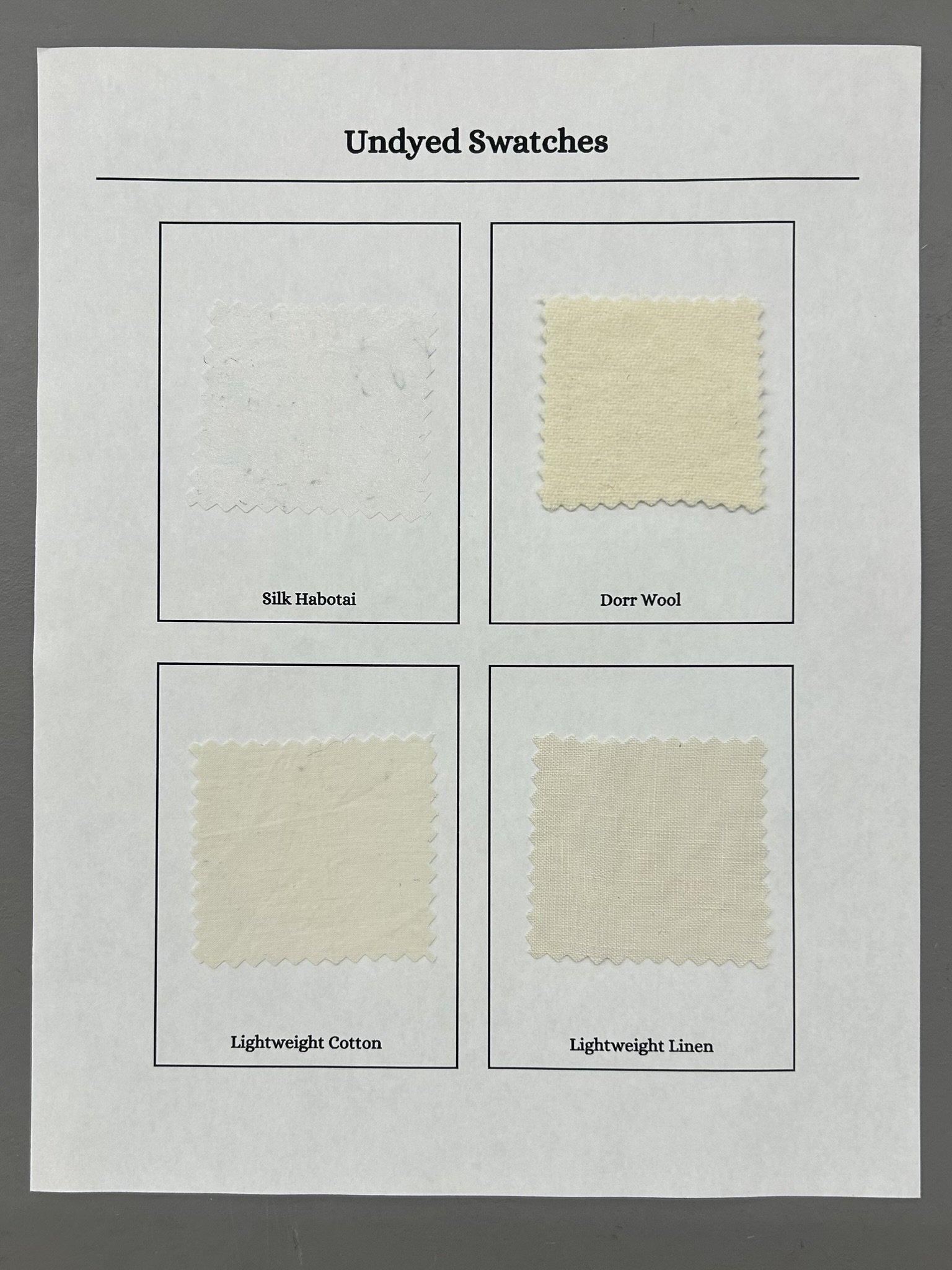
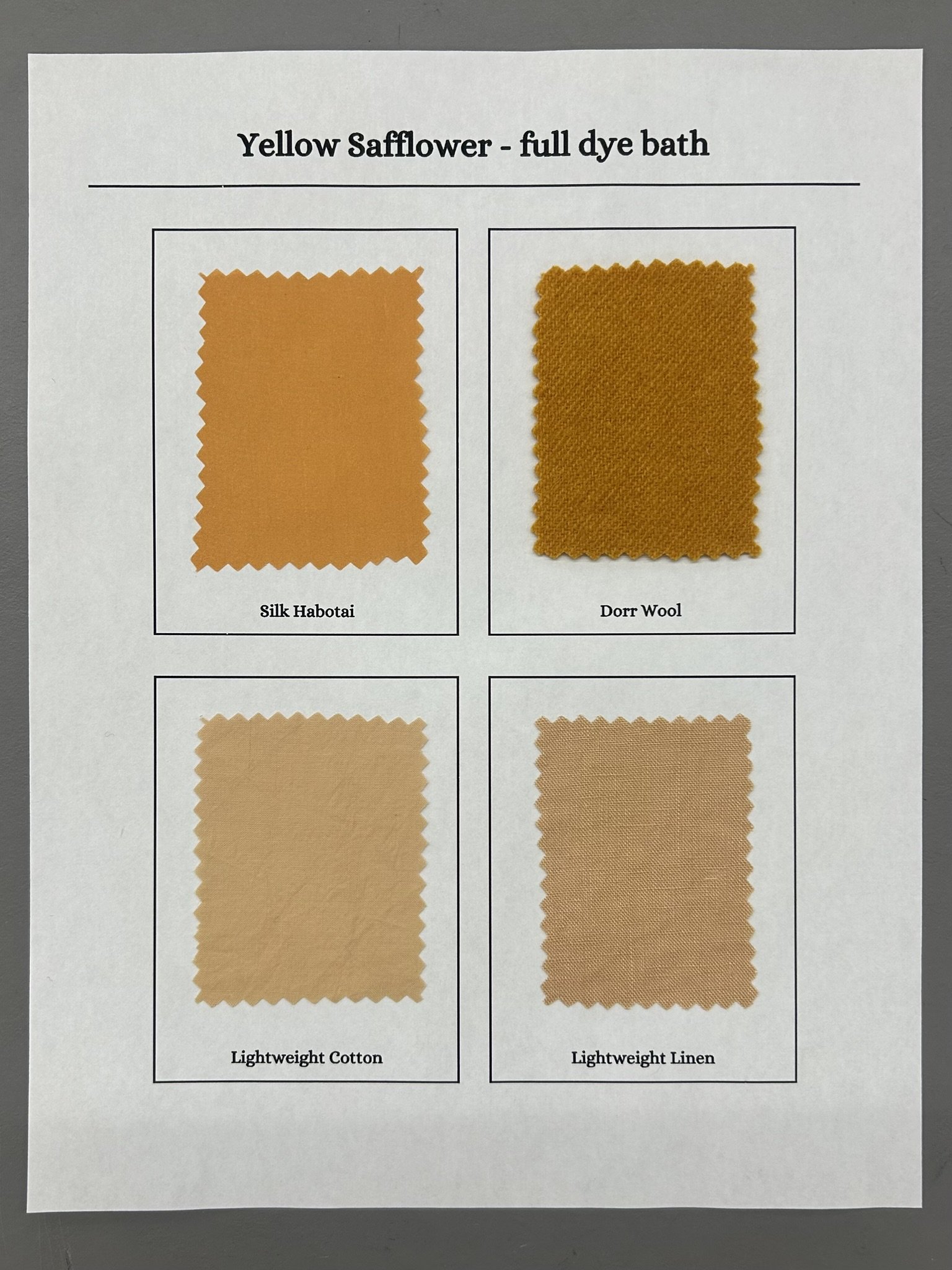
Safflower is unique due to its ability to produce both pink and yellow pigment depending on the process taken during the dye baths. Therefore, safflower dye samples were produced on silk habotai, dorr wool, lightweight cotton, and lightweight linen to see the results for obtaining yellow pigment versus pink pigment.
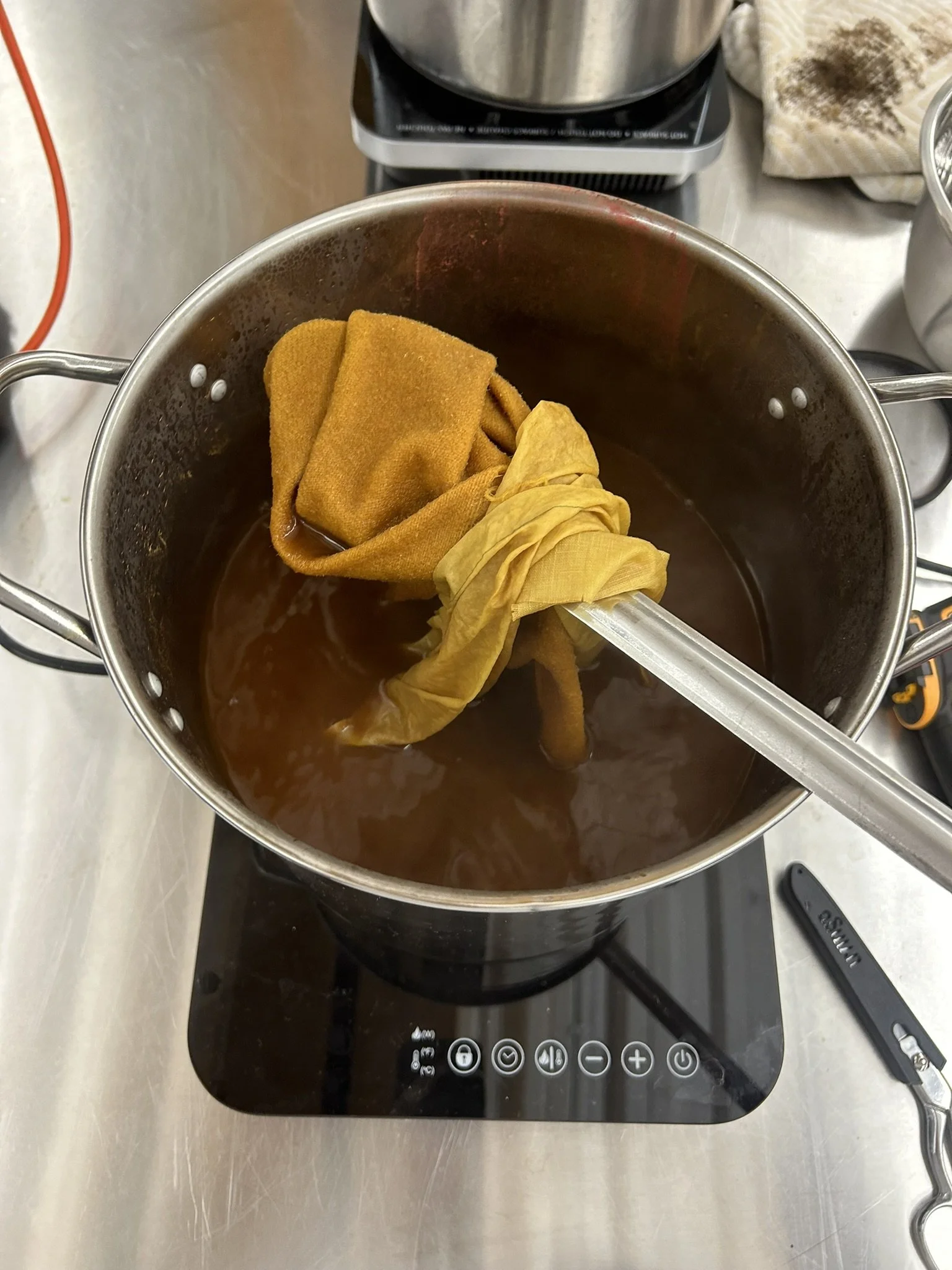
Please click on the arrows to view more.
Sashiko and Embroidery Exploration
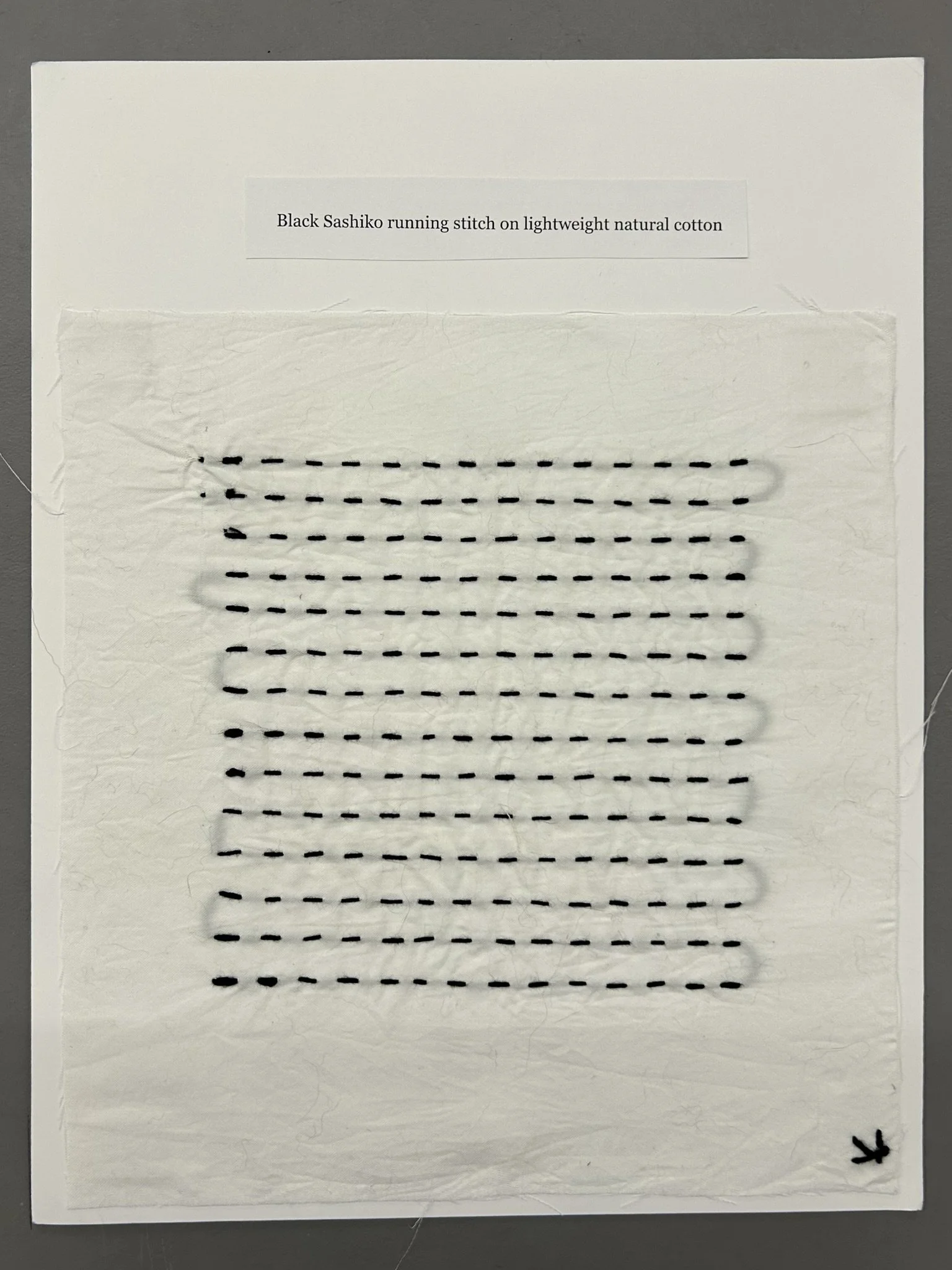
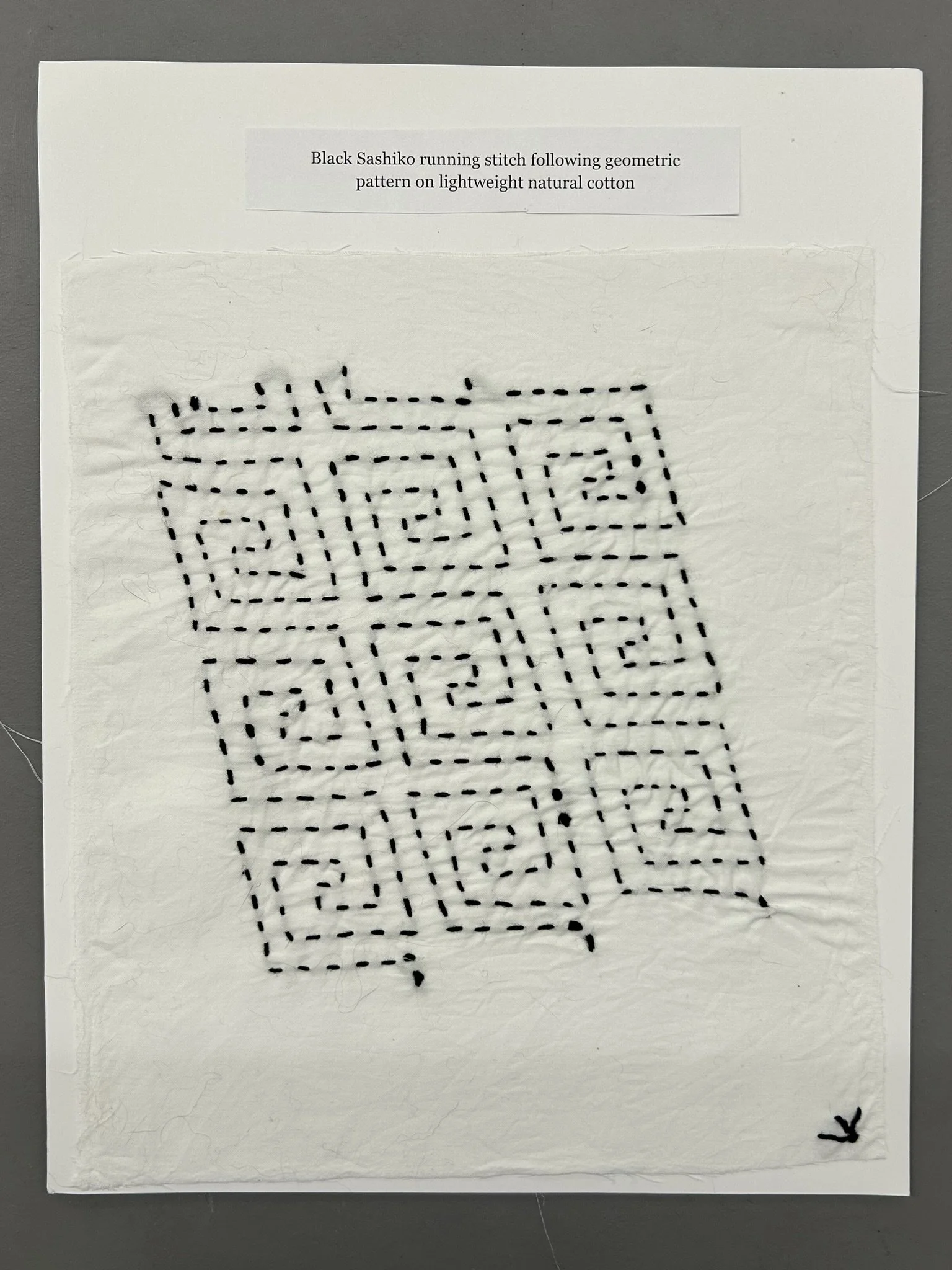
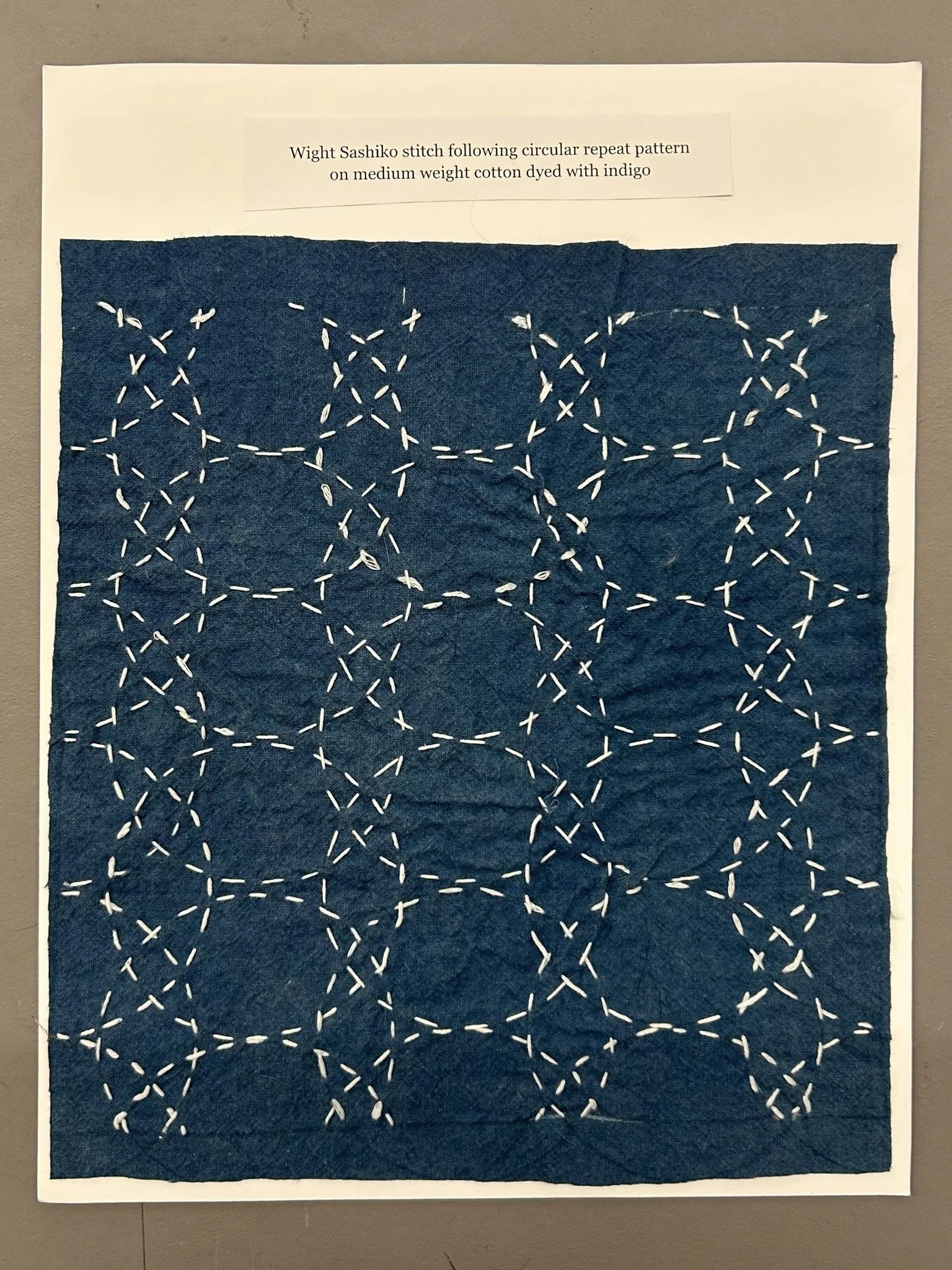
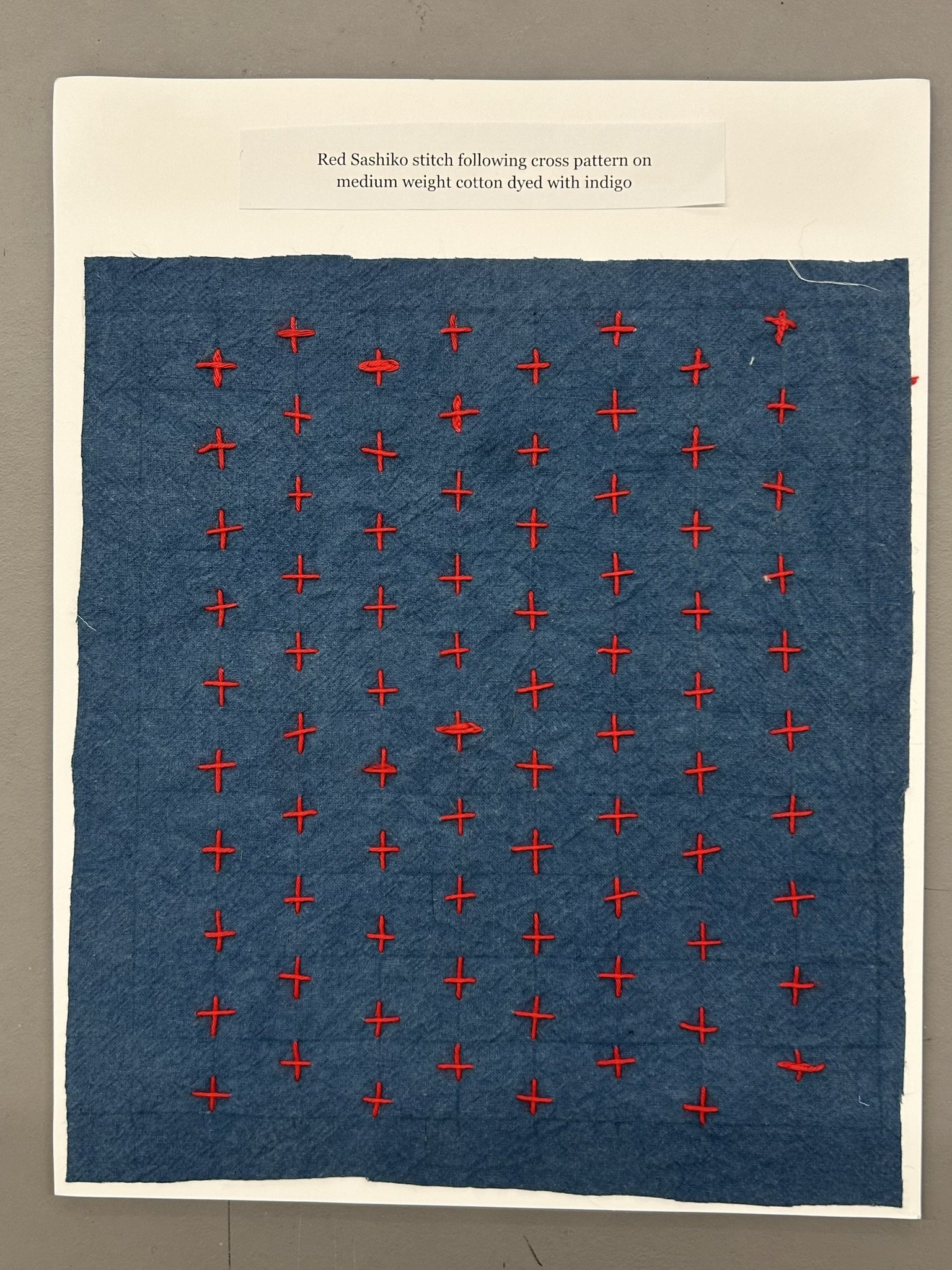
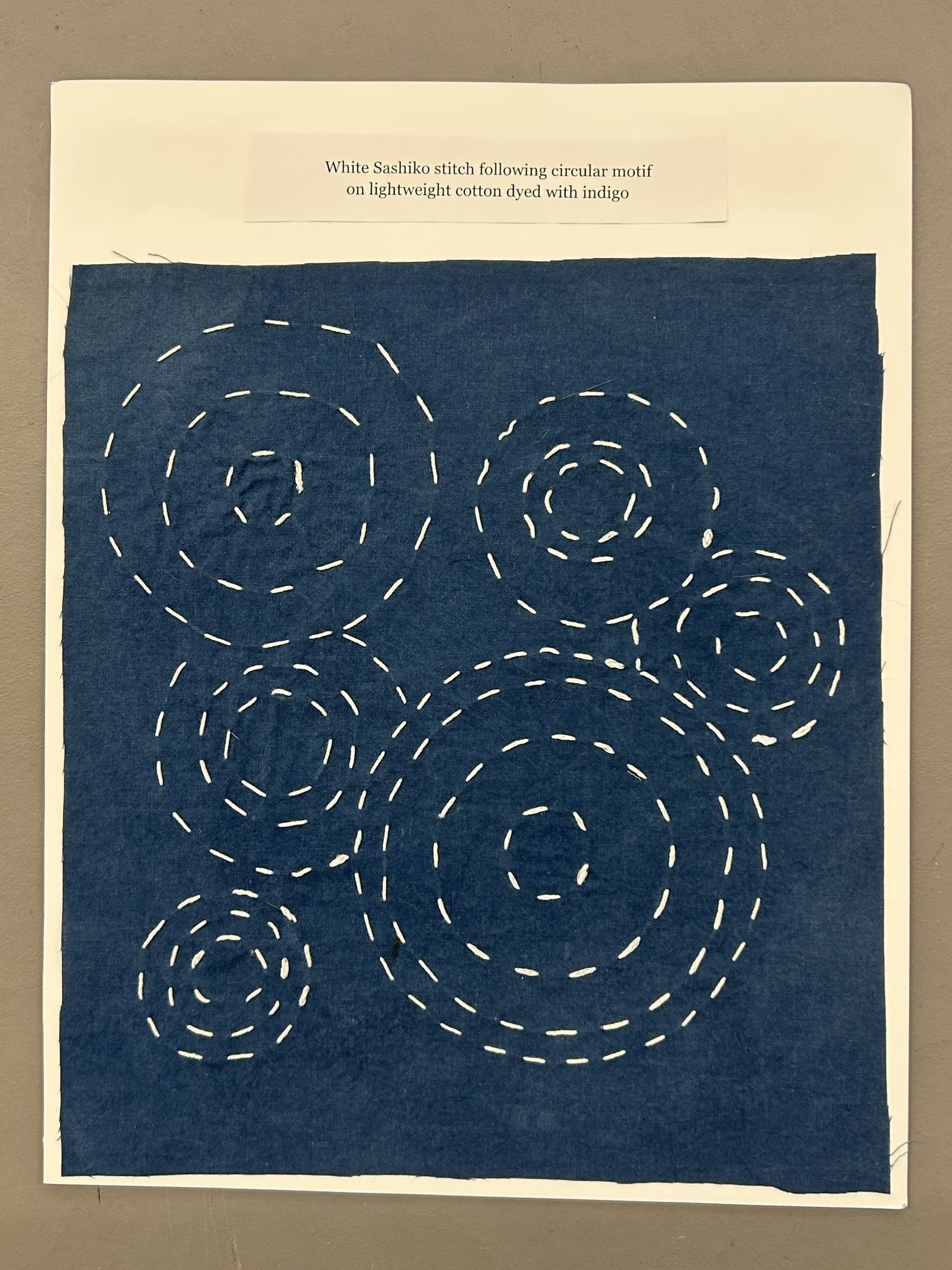
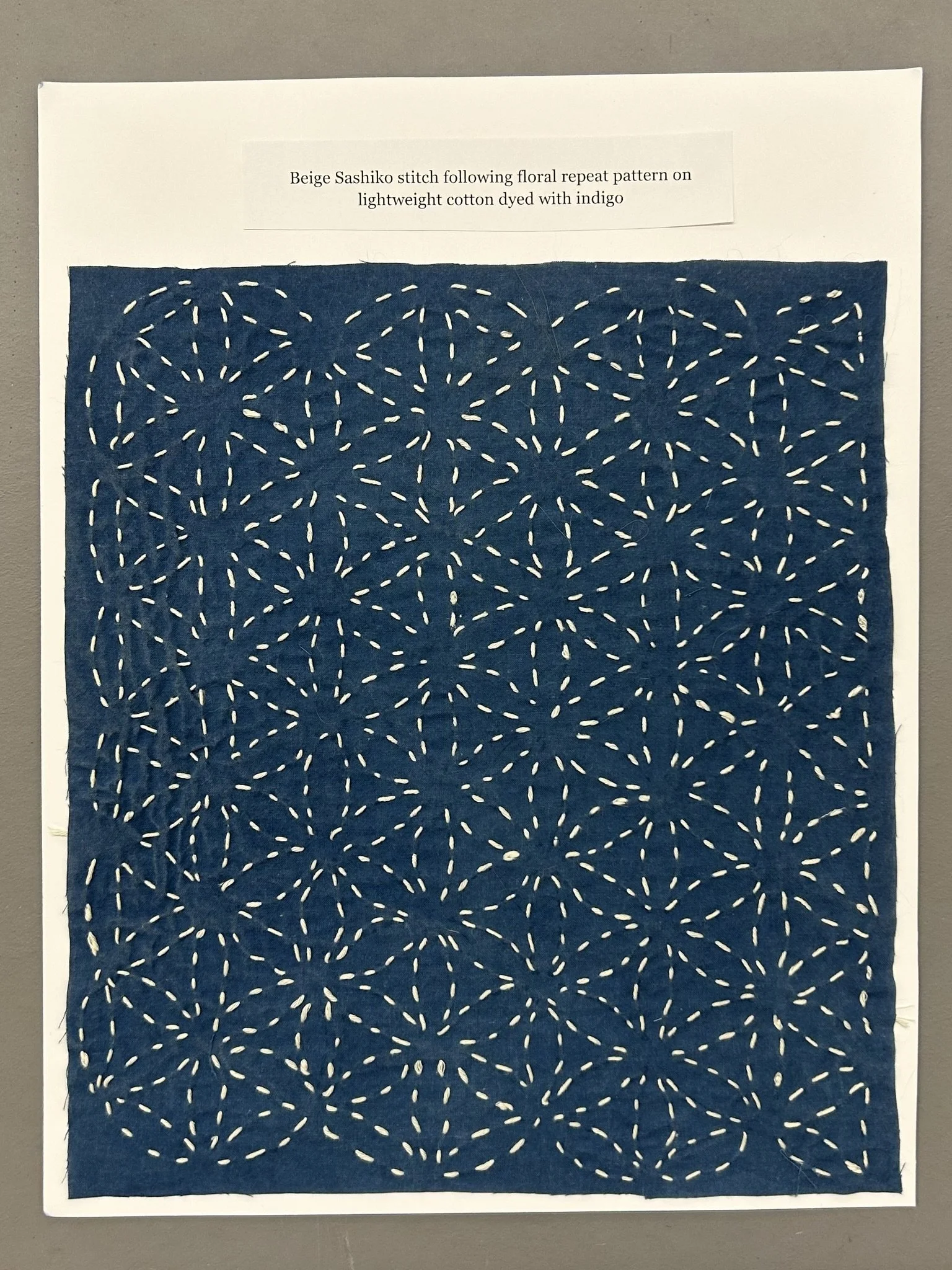
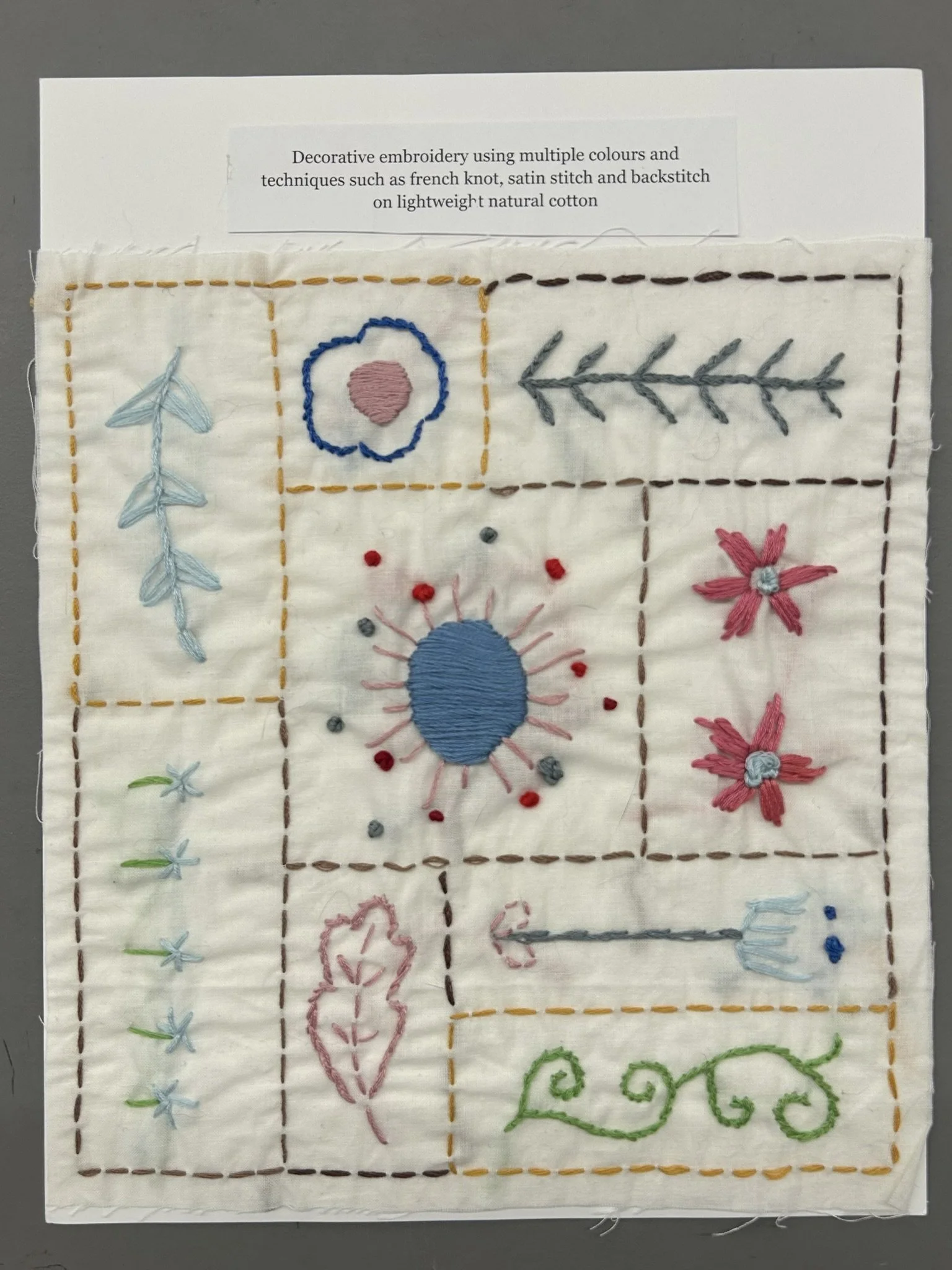
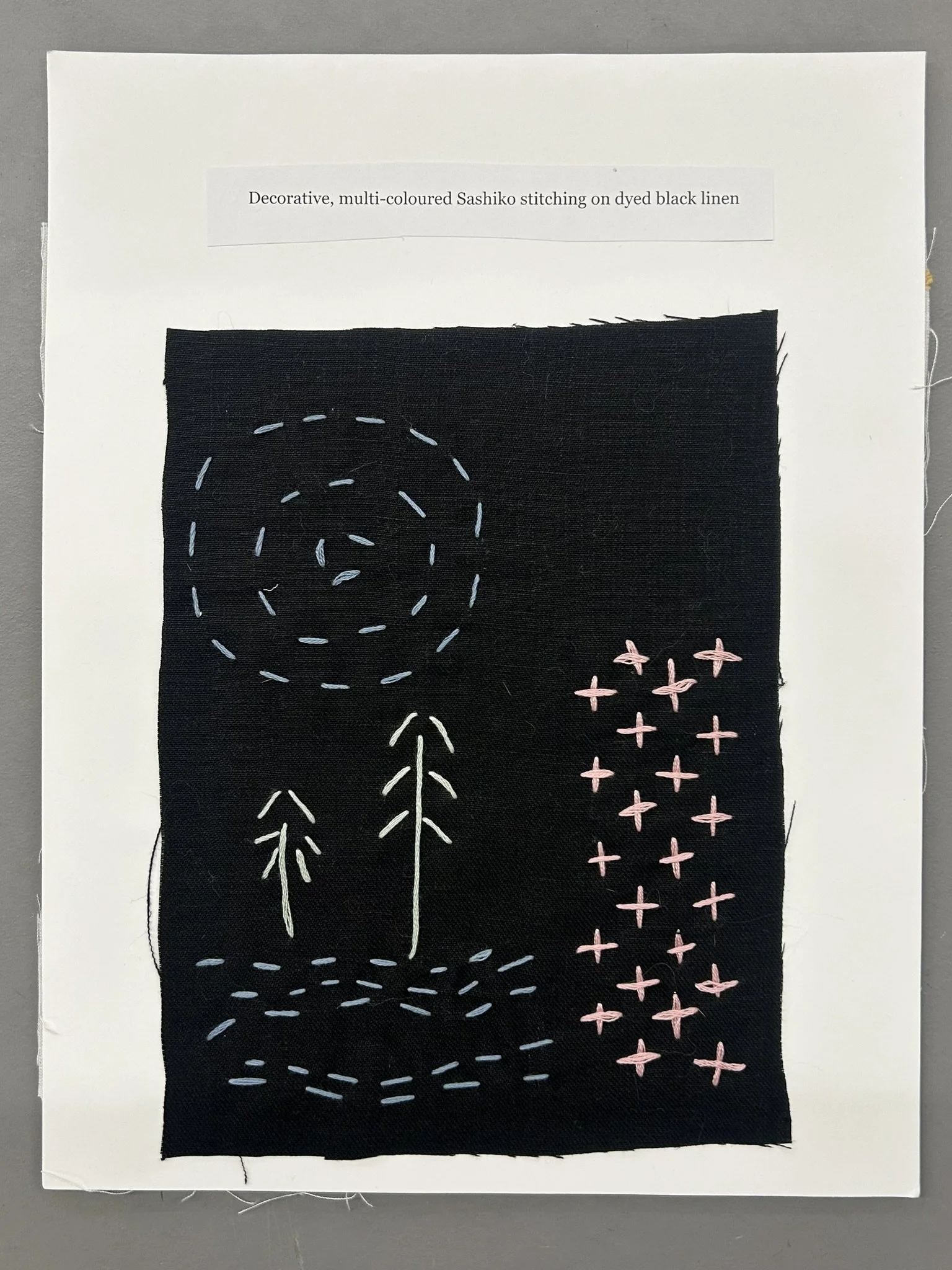
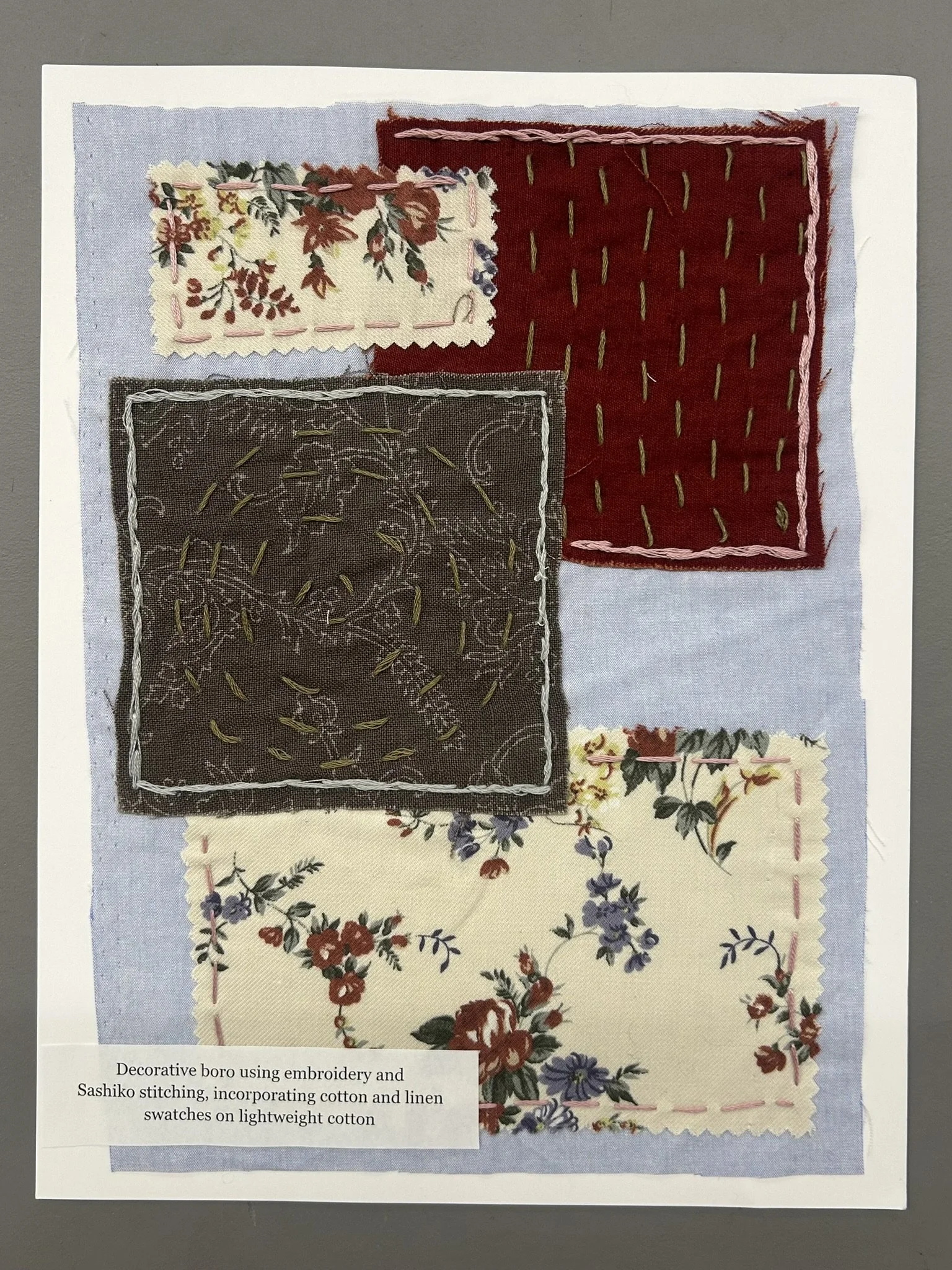
Explored a glimpse into the world of embroidery with an emphasis on Sashiko, a traditional Japanese technique which is both decorative and functional.
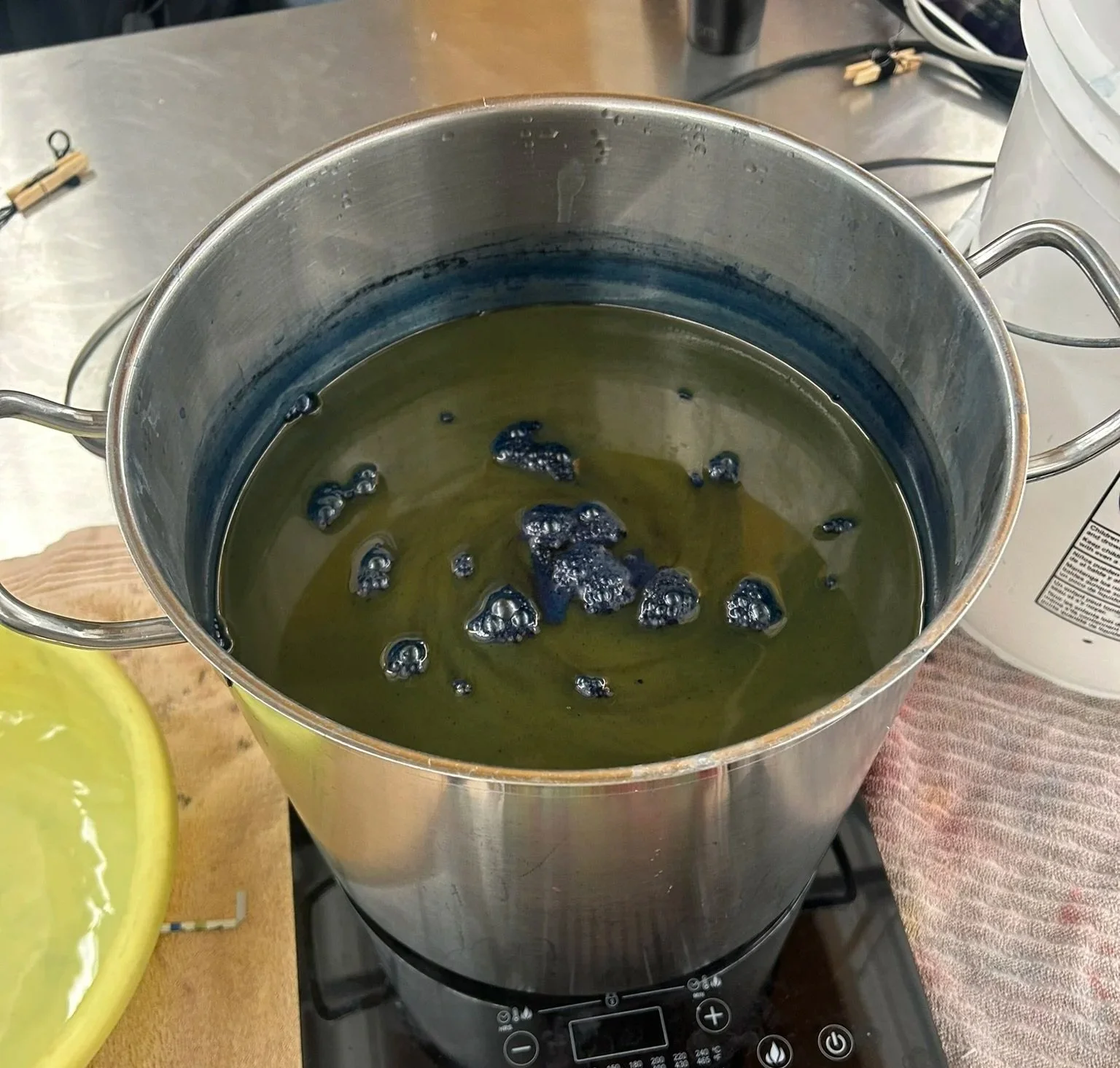
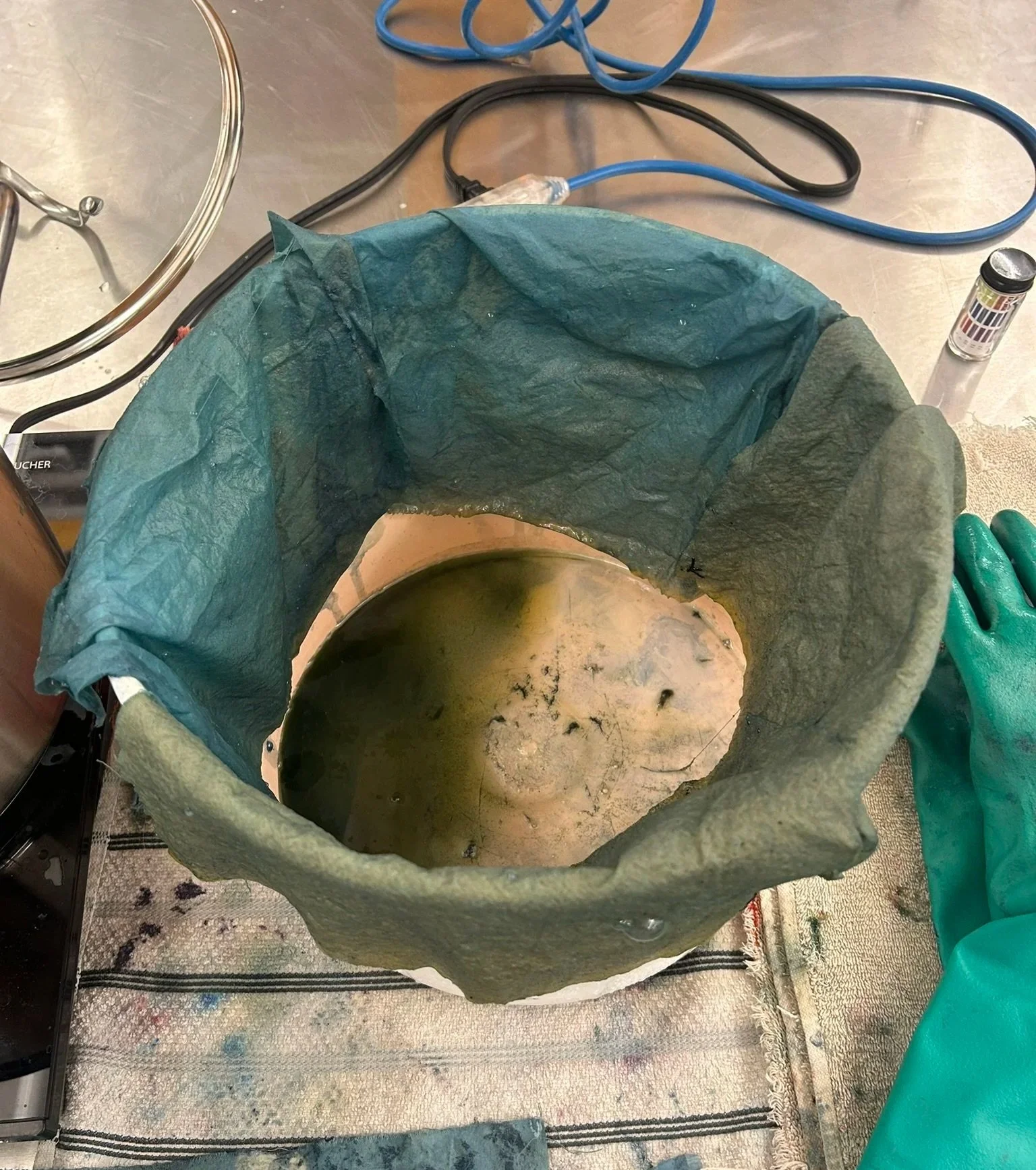
Sashiko is composed of running stitches which can form simple lines or complex patterns. Since this technique is historically done on fabric dyed with indigo, several samples of fabric were dyed with 5-8 dips of indigo, dried, pressed, then stitched on.
Please click on the arrows to view more.